Food & Treats

5 Best Puppy Food for St Bernards of 2026: Which Ones Avoid Digestive Upset

Your St. Bernard puppy needs a food that fuels rapid growth without causing stomach issues. We help you pick based on real-world digestive tolerance.

Large breed puppy foods all advertise joint health and brain development, but many St. Bernard owners quickly learn that ingredient lists don't predict how well a food will stay down. The real test is whether a formula agrees with a giant breed puppy's sensitive stomach.

The most telling difference between options isn't protein levels or DHA content. It is how frequently puppies get diarrhea on a given food. Some formulas cause more digestive upset than others, regardless of price or brand reputation.

This guide focuses on which large breed puppy foods actually work for St. Bernard puppies, based on how owners report their dogs respond, so you can pick one that supports growth without the cleanup.

1

Purina Pro Plan LB Puppy

Top Pick
Purina Pro Plan LB Puppy

Trusted large breed

Our Score 9.4/10
Check Price

Worth Noting

  • Some puppies may experience diarrhea or vomiting during the transition to this food.
Protein Source
Real Chicken
Brain Development
DHA from fish oil
Read the full review

Purina Pro Plan Large Breed Puppy Food delivers a nutrition profile specifically calibrated for large breed growth, with real chicken as the first ingredient and DHA from fish oil for brain development. Dogs consistently enjoy the flavor, and owners report noticeable improvements in coat shine and skin condition. The main tradeoff is that some puppies may experience digestive upset during transition, making a gradual introduction advisable.

This food suits St. Bernard owners who prioritize a well-tested formula with strong joint support (glucosamine) and are willing to introduce it gradually. It is less ideal for puppies with existing food sensitivities or for extreme budget shoppers, as it sits at a premium price point.

Transition over 7-10 days by mixing increasing proportions of this food with the previous diet to minimize digestive upset.

Bottom line: For St. Bernard owners willing to transition carefully, this food offers the most reliable balance of taste, coat health, and growth support among large breed puppy formulas.
2

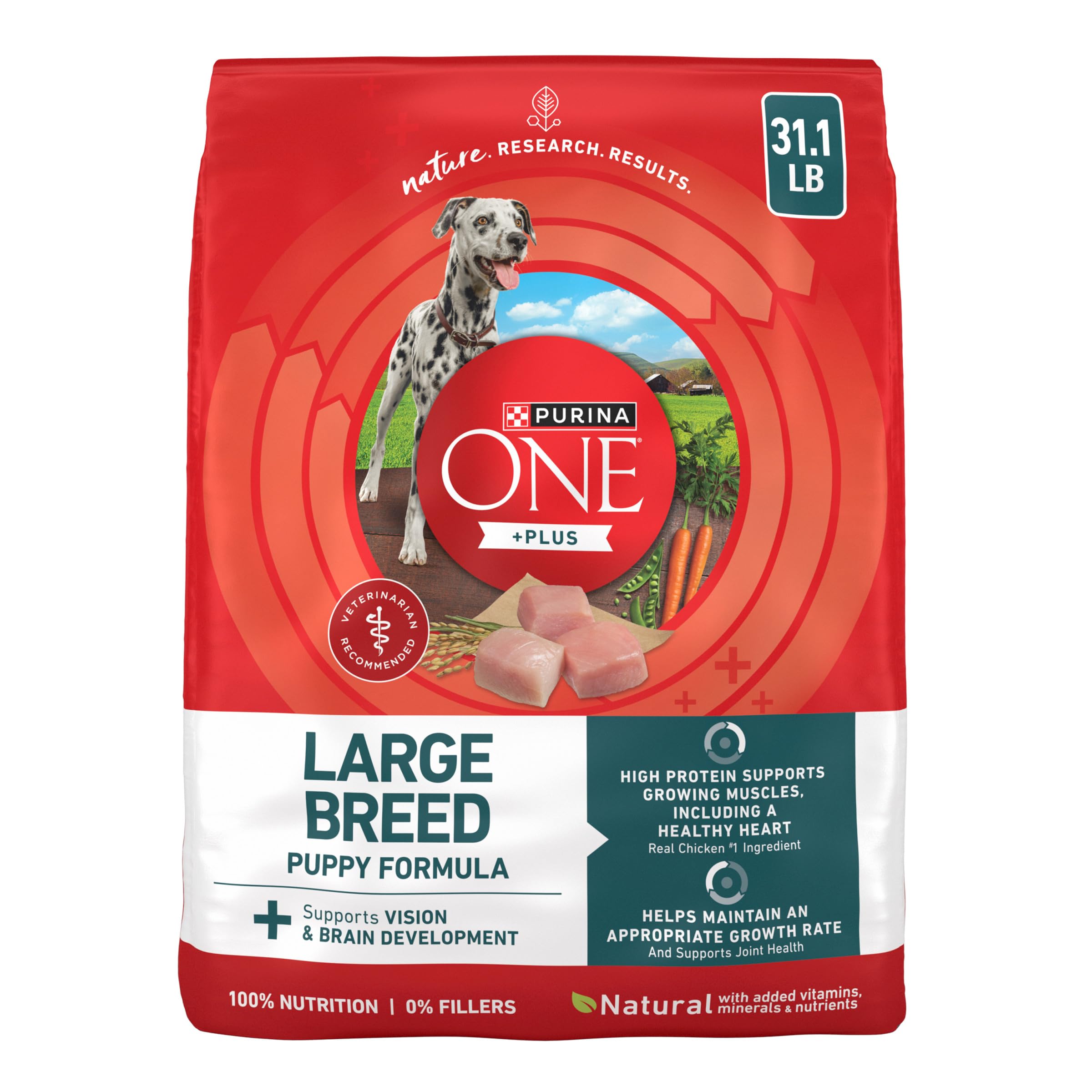
Purina ONE Plus LB Puppy

Purina ONE Plus LB Puppy

Great value

Our Score 9.4/10
Check Price

Worth Noting

  • Some puppies may refuse the food due to taste or texture.
  • Digestive upset such as diarrhea or vomiting can occur in sensitive puppies.
Protein Source
Real Chicken
Brain Development
DHA
Read the full review

Purina ONE delivers many of the same core nutrients as the top pick — real chicken, DHA, and glucosamine — at roughly half the cost per pound. Owners report healthy growth and energy levels, though the kibble may not appeal to every puppy. Digestive upset has been noted in some cases. This formula suits budget-conscious households with large breed puppies that have non-sensitive stomachs and aren't picky about food. It offers solid ingredient quality for the price, making it a practical choice for St. Bernard puppies that tolerate it.

Transition gradually over 7-10 days to reduce the chance of stomach upset.

Bottom line: For cost-conscious owners of large breed puppies with easy digestion, this is a smart value play — just don't expect universal acceptance.

3

IAMS Proactive LB Puppy

IAMS Proactive LB Puppy

Growth-focused

Our Score 9.4/10
Check Price

Worth Noting

  • Can cause diarrhea or vomiting in sensitive puppies during transition.
Protein Source
Real Chicken
Brain Development
Omega-3 DHA
Read the full review

IAMS Proactive Health Large Breed Puppy delivers strong growth support at a budget-friendly price, making it a cost-effective option for St. Bernard owners. Real chicken and DHA support healthy development, while controlled calcium levels aid bone growth. Compared to the top pick, it costs roughly half as much per pound, but digestive upset can occur in some puppies, requiring a gradual transition over a week or more. This food suits owners who prioritize affordability and are willing to monitor their puppy's reaction closely.

Transition over 7-10 days, mixing increasing amounts of IAMS with the old food to minimize digestive upset.

Bottom line: This is the most affordable large breed puppy food we've seen, but it's best suited for owners who can manage a careful feeding transition and monitor their puppy's digestive response.

4

Hill's Science Diet LB Puppy

Hill's Science Diet LB Puppy

Vet recommended

Our Score 9.4/10
Check Price

Worth Noting

  • For a growing St. Bernard, the 15.5 lb bag requires frequent repurchases, and the per-pound cost is high.
Protein Source
Chicken
Brain Development
DHA from fish oil
Read the full review

Hill's Science Diet is the #1 vet-recommended brand, with balanced minerals for joint health and DHA for brain development. The 15.5 lb bag is small for a giant breed puppy, and the high cost per pound adds up. Best for owners who follow vet advice and have a single small puppy.

Bottom line: This formula works for owners who prioritize veterinary guidance and have a single small-breed puppy, but the bag size and cost make it impractical as a primary food for a St. Bernard.

5

Blue Buffalo LB Puppy

Blue Buffalo LB Puppy

Natural ingredients

Our Score 9.2/10
Check Price

Worth Noting

  • Real-world digestive tolerance and growth results may be uncertain due to limited customer feedback.
Protein Source
Real Chicken
Brain Development
DHA and ARA
Read the full review

This formula uses real chicken, DHA for brain development, and LifeSource Bits for antioxidants — a clean label with no corn, wheat, or soy. Without detailed customer feedback, it is unclear whether the premium price translates to better digestive tolerance or growth outcomes compared to options with extensive user reports.

Bottom line: Best for owners who prioritize a clean ingredient list and are comfortable relying on brand reputation rather than user reviews to judge performance.

How to Choose

Joint Support

St. Bernards are prone to hip and elbow dysplasia, making glucosamine and chondroitin a key addition to their diet. These compounds support cartilage health and can reduce the risk of joint problems as the puppy grows.

Not all large breed puppy foods include these ingredients, and even when they do, the dosage varies. A food that lists glucosamine on the label is a safer choice for giant breeds, but it is not a guarantee against joint issues on its own.

Brain Development

DHA (docosahexaenoic acid) is an omega-3 fatty acid critical for brain and eye development in puppies. Most large breed formulas now include it, but the source matters. DHA from fish oil is more easily absorbed than synthetic alternatives.

St. Bernard puppies grow rapidly, and their cognitive development benefits from a consistent supply of DHA during the first year. Foods that also provide ARA (arachidonic acid) offer additional support for neural growth.

Calcium and Phosphorus Balance

Giant breed puppies require carefully controlled levels of calcium and phosphorus to avoid skeletal deformities. Too much calcium can lead to osteochondrosis, while too little can cause weak bones.

Foods labeled specifically for large or giant breeds are formulated with this balance in mind. Avoid all-purpose puppy foods that may contain higher calcium levels suited for smaller breeds.

Protein Content and Source

A high-quality protein source like real chicken is essential for muscle development, but the total protein percentage matters too. St. Bernard puppies need enough protein to support growth without triggering excessive speed, which can strain joints.

Look for a named meat as the first ingredient and a protein level around 28-32% on a dry matter basis. Foods with very high protein (above 35%) may accelerate growth unnaturally and increase the risk of developmental issues.

Digestive Tolerance

Digestive upset is the most common complaint among St. Bernard owners, regardless of brand. Diarrhea and vomiting often appear during the transition to a new food or when the formula does not agree with the puppy's sensitive stomach.

A gradual transition over 7-10 days is essential. Some foods cause less frequent issues than others, but no formula is immune. Check recent owner feedback for patterns of stomach sensitivity before committing to a large bag.

Frequently Asked Questions