Tech & Gadgets

8 Best GPS Dog Collar of 2026: Real Tracking, No Monthly Fees

Find a GPS dog collar that actually tracks your dog without hidden subscription costs or Bluetooth-only fakes.

Many dog owners buy a 'GPS tracker' only to discover it relies on Bluetooth and stops working once the dog leaves the yard. Others sign up for a subscription that costs more over two years than the collar itself. The real choice is between a tracker that uses genuine GPS and one that doesn't.

This guide focuses on real GPS collars that provide real-time location updates, either with no monthly fees or with transparent subscription costs. Each pick balances accuracy, battery life, and long-term value for different use cases.

Some trackers excel at location accuracy with no recurring costs but skip health monitoring; others log every nap and scratch but require a yearly fee and sometimes lag on location updates. Battery life, update frequency, and collar size matter far more than marketing claims.

1

Garmin Pro 550 Plus

Top Pick
Garmin Pro 550 Plus

Hunting & training

Our Score 9.4/10
Check Price

Worth Noting

  • Satellite acquisition can be slow at startup
  • Premium pricing restricts this to serious users rather than occasional pet owners.
Range
2+ miles
Update Rate
2.5 sec
Subscription
None
Smartphone App
No (handheld)
Read the full review

This system bundles both collar and handheld, so you get direction and distance on a dedicated screen without pulling out your phone. The 18-level stimulation, tone, and vibration options give fine control during training. Satellite acquisition can lag at start — waiting a minute before heading out helps. The premium price and occasional sync delays make this a tool for serious hunters and field trial enthusiasts, not for casual walks around the block.

Power on the handheld a few minutes before heading out to let satellites lock in.

Bottom line: Best for dedicated hunters who want a self-contained system that doesn't depend on a phone. Casual owners should look at lower-cost alternatives.

2

Garmin Alpha TT 25

Garmin Alpha TT 25

Existing Garmin users

Our Score 9.4/10
Check Price

Worth Noting

  • Requires a separate Garmin handheld to function
Range
9 miles
Update Rate
2.5 sec
Subscription
None
Smartphone App
No (handheld)
Read the full review

The Garmin Alpha TT 25 delivers exceptional battery life — up to 68 hours standard and 136 hours in extended mode — with accurate GPS tracking down to the foot. However, it requires a separate Garmin handheld (not included) and lacks smartphone app connectivity, making it unsuitable for first-time buyers or those seeking standalone operation. The collar is also bulky, not ideal for small breeds under 15 lbs.

Bottom line: Best for existing Garmin handheld owners who prioritize battery life and ruggedness over smartphone convenience.

3

Garmin PT10

Garmin PT10
Our Score 9.4/10
Check Price

Worth Noting

  • Cannot provide any location tracking - not a GPS tracker.
Read the full review

The Garmin PT10 functions as a reliable e-collar receiver for Garmin Pro 70/Pro 550 training handhelds, delivering consistent stimulation for behavior training. However, it provides zero location tracking capability - this is not a GPS tracker and should not be purchased if you need real-time location monitoring for your dog.

Bottom line: Buy this only if you already own a compatible Garmin training handheld and need an additional e-collar receiver - not for GPS tracking.

4

Dogtra Pathfinder 2

Dogtra Pathfinder 2

Tracking & training

Our Score 9.2/10
Check Price

Worth Noting

  • For dogs under 15 pounds, the collar may be too bulky to fit comfortably
  • Battery life can be inconsistent; some units may experience charging issues
Range
9 miles
Update Rate
Real-time
Subscription
None
Smartphone App
Yes
Read the full review

The Dogtra Pathfinder 2 provides real-time GPS tracking with a 9-mile range and no subscription fees, a rare combination in this category. The built-in e-collar adds training stimulation that can be triggered from your phone or an Apple/Galaxy smartwatch, with adjustable levels for gentle corrections. The collar is fully waterproof and survives lake jumps without damage. Geofencing sends immediate alerts when your dog leaves a designated area, and the tracker holds signal in wooded areas where cellular collars disconnect. The phone app displays live location on a map with route history and customizable fences.

This setup works best for owners of medium to large dogs who prioritize off-leash tracking without ongoing costs. Hunters and hikers will appreciate the long-range connectivity and integrated correction features. The collar's bulk makes it unsuitable for dogs under 15 pounds, and battery life can vary across units — some have noted the collar failing to turn on after charging. The premium upfront price is balanced by the elimination of monthly fees over the product's lifespan.

Keep the charging contacts clean and ensure the collar is fully seated in the charger to avoid connection issues.

Bottom line: The Dogtra Pathfinder 2 offers a strong combination of no-subscription GPS tracking and training in a rugged collar, suited for owners who want freedom from monthly fees and consistent long-range performance.

5

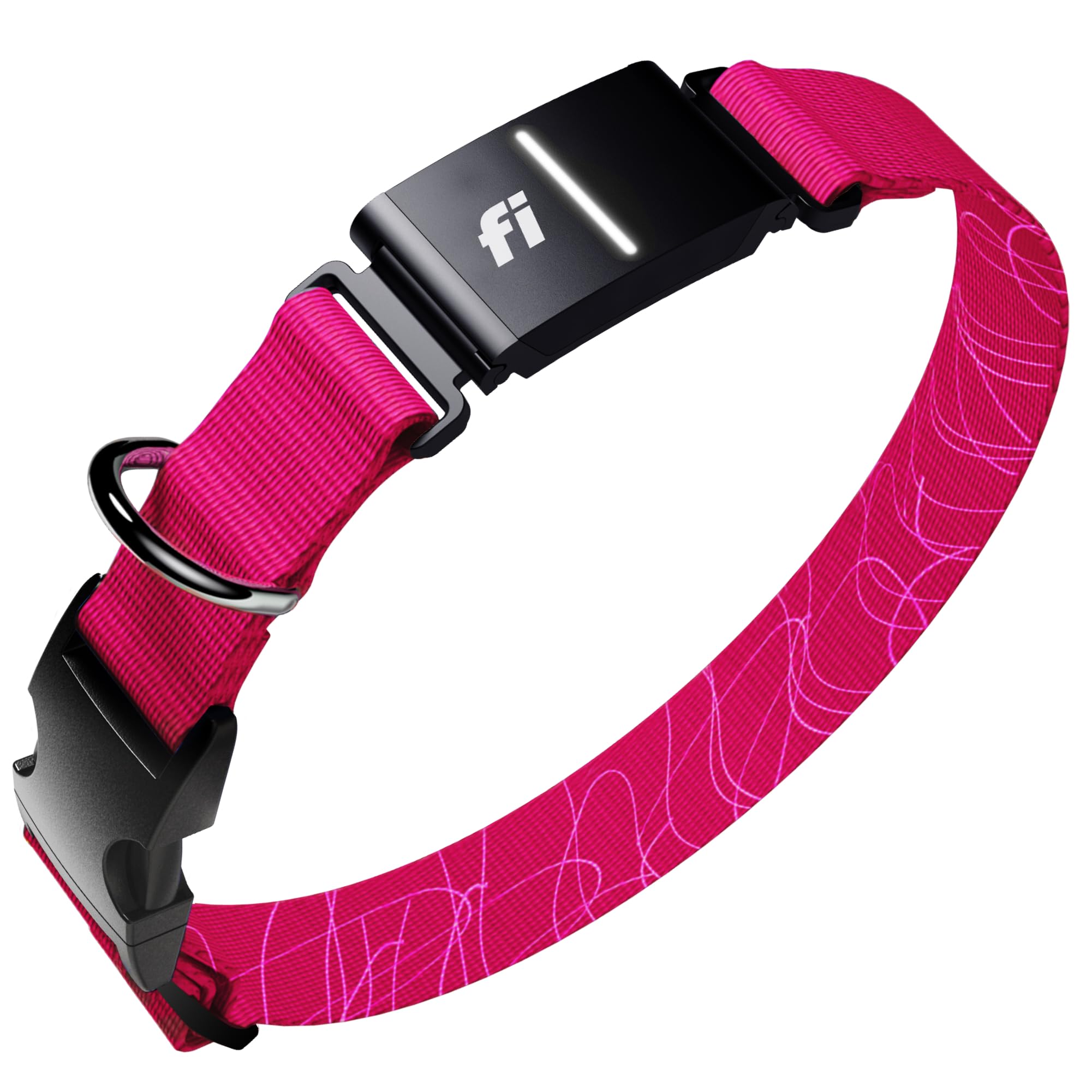
Fi Series 3+

Fi Series 3+

Health & activity

Our Score 8.2/10
Check Price

Worth Noting

  • GPS location updates can be delayed or imprecise, making real-time tracking unreliable in some situations.
  • Requires a paid subscription after the first 12 months to maintain core features.
Range
Unlimited (cellular)
Update Rate
Subscription
Required after 1 yr
Smartphone App
Yes (Apple Watch)
Read the full review

The Fi Series 3+ delivers rich health monitoring — activity, sleep, scratching, and more — alongside escape alerts and a Lost Mode that offers peace of mind if your dog wanders. Setup takes minutes, and the app is intuitive. Compared to the Dogtra Pathfinder 2 (top pick for real-time no-fee GPS), the Fi relies on a cellular subscription after the first year and its location updates can lag or be imprecise. This tradeoff makes sense for owners who prioritize wellness data over pinpoint tracking.

Best suited for tech-savvy owners who want a health-focused collar and are comfortable with a paid subscription (required after 12 months). If your main concern is preventing escape with reliable real-time location, the subscription-free Dogtra with more consistent GPS is a better fit.

Expect to charge the collar weekly rather than the claimed three months, especially with active use.

Bottom line: Choose the Fi Series 3+ if health insights and Apple Watch integration are your priorities and you can accept a subscription cost and occasional GPS lag.

6

Ztobny Tracker

Ztobny Tracker
Our Score 8.2/10
Check Price

Worth Noting

  • When a dog wanders beyond Bluetooth range (about 300 ft), the tracker loses contact and provides no location data.
Read the full review

Works as a low-cost key finder within phone range (100-300 ft) using Google's Bluetooth network. No monthly fees are appealing, but this device cannot provide real-time location for a roaming dog — it only alerts when the dog is near a phone on the network. Best suited for items that stay close to you, not for pet safety beyond arm's length.

Bottom line: Useful for attaching to a wallet or keys, but not a solution for tracking a dog that roams off-leash.

7

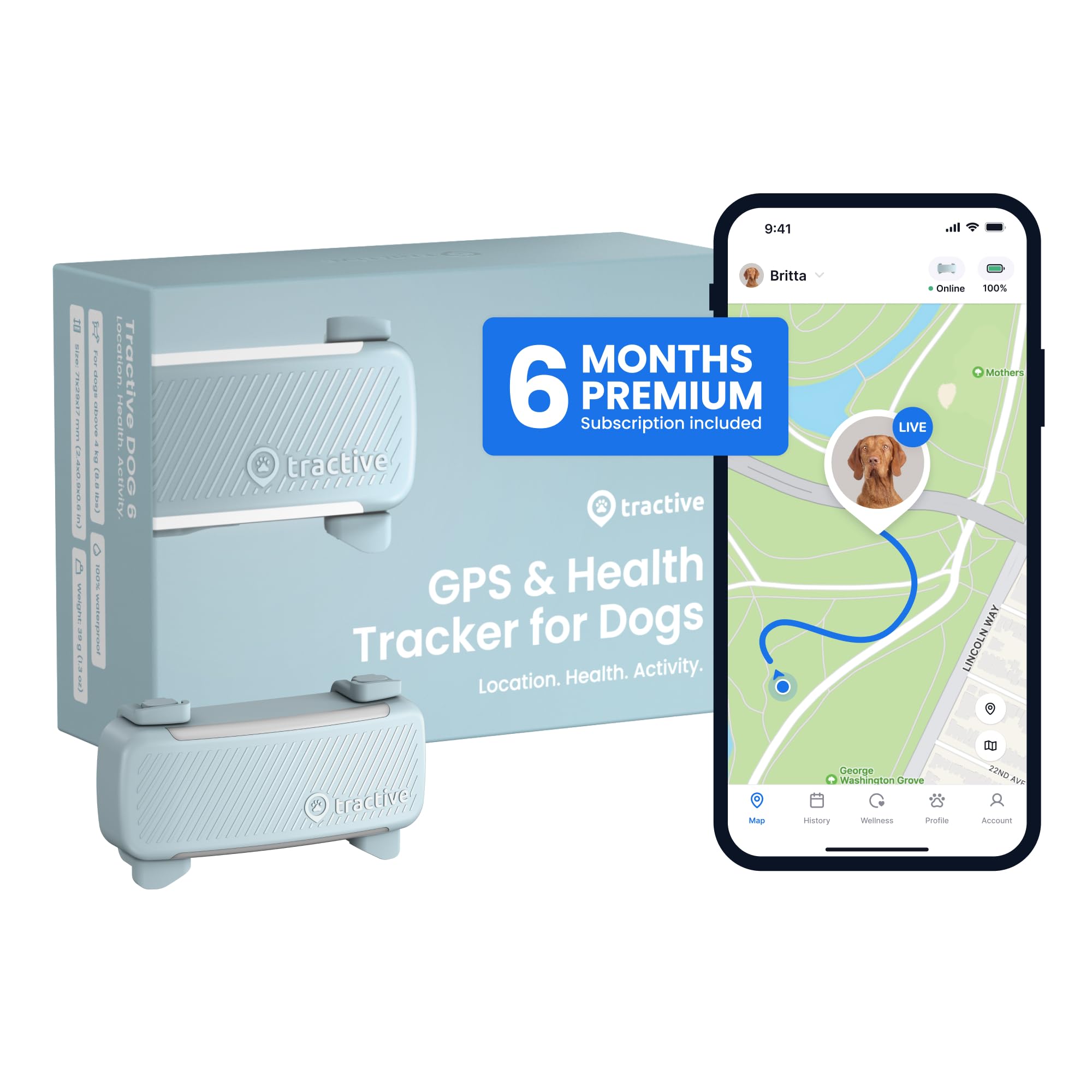
Tractive GPS Tracker

Tractive GPS Tracker

Budget tracking

Our Score 8.0/10
Check Price

Worth Noting

  • Requires a subscription after six months to keep the tracker active
  • Battery life drops significantly with heavy live tracking, possibly requiring daily charging
Range
Unlimited (cellular)
Update Rate
2-3 sec
Subscription
Required after 6 mo
Smartphone App
Yes
Read the full review

At less than $100, the Tractive offers one of the lowest entry points for a cellular GPS tracker with real-time location updates and health monitoring. Its large user base and positive feedback on value make it a popular first step into pet tracking.

This tracker suits budget-conscious owners who accept an ongoing subscription after the initial six months. That tradeoff, along with occasional app disconnects and shorter battery life when using live mode, makes it less ideal for those wanting a set-and-forget solution.

Standard mode extends battery life noticeably; reserve live mode for active search scenarios.

Bottom line: An affordable entry point for owners comfortable with ongoing fees and occasional charging — best suited to light daily use rather than heavy live tracking.

8

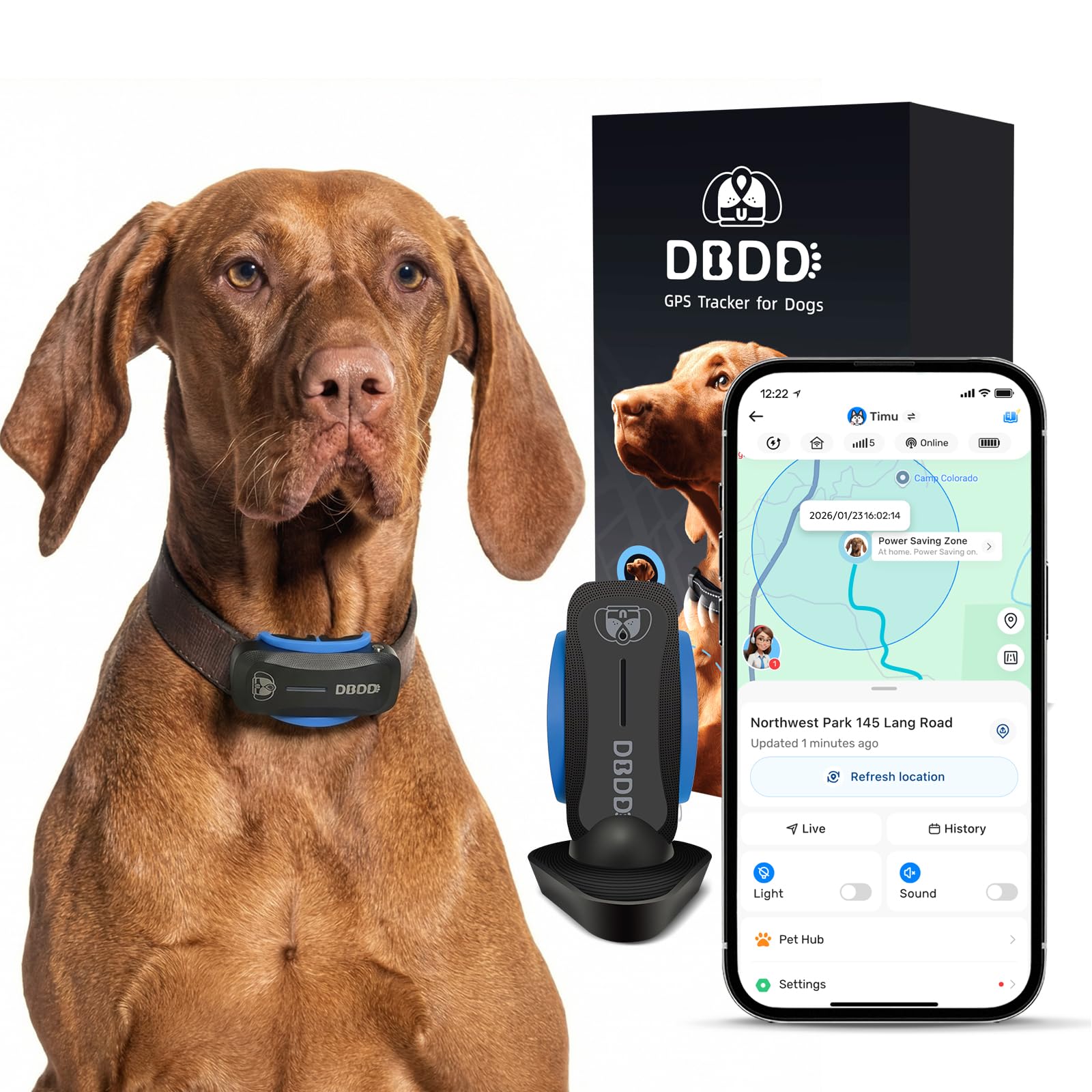
DBDD AI Tracker

DBDD AI Tracker

Budget backup

Our Score 8.0/10
Check Price

Worth Noting

  • Silicone attachment piece may wear out, affecting long-term collar security.
Range
Unlimited (cellular)
Update Rate
Subscription
Required
Smartphone App
Yes
Read the full review

The DBDD AI Tracker delivers accurate real-time GPS tracking and basic health monitoring at an upfront price well below main competitors. The app is straightforward to set up, and battery life holds up for daily walks. However, the silicone collar clip may wear out over time, and the required subscription costs are not fully transparent upfront. With a smaller review base and these durability notes, this tracker functions best as an affordable backup or trial option for medium to large dogs, not a primary long-term solution.

Bottom line: Best used as a secondary or trial tracker for cost-conscious owners with medium to large dogs who accept ongoing subscription fees.

How to Choose

Update Frequency

Real-time GPS trackers update every 2–3 seconds, while others update once per minute to save battery. A faster update rate means you can follow a running dog step by step, but it drains the battery much quicker.

For casual walks or dogs that stay close, a 60-second update is sufficient. For hunters or escape artists in dense terrain, a 2-second update can mean the difference between a quick recovery and a lost trail.

Subscription or No Monthly Fees

Cellular trackers require a SIM card and a monthly or yearly fee, typically $8–$15 per month. Within 2–3 years, those fees can exceed the cost of a premium no-subscription collar.

Radio-based collars like the Dogtra and Garmin systems use licensed frequencies and have zero recurring costs. The trade-off is a limited range (9 miles max) and the need for a compatible handheld receiver.

Range

Cellular trackers work anywhere there is cell coverage, which is essentially unlimited in populated areas. Radio trackers have a fixed range up to 9 miles in open terrain, but that range drops in forests or hills.

If you hike in remote backcountry with no cell towers, a radio collar is the only reliable option. In suburban environments, cellular trackers offer peace of mind that the dog can be found anywhere within the LTE network.

Battery Life

Claimed battery life is often twice what you get in real-world use, especially when using live tracking mode. A collar that promises 3 months may need a charge every 1–2 weeks if you frequently check the location.

Larger batteries extend runtime but add bulk. For small dogs, a collar that needs weekly charging may be acceptable if the device is lightweight. For hunting trips, look for collars with at least 48 hours of continuous tracking.

Smartphone Compatibility

Most GPS collars pair with a smartphone app for mapping, geofencing, and alerts. These are convenient for everyday owners but require cellular or Wi-Fi connectivity on both the collar and the phone.

Some Garmin systems rely on a dedicated handheld unit instead of a phone. That setup is more rugged and works without cell coverage, but it means carrying an extra device and losing the convenience of push notifications.

Frequently Asked Questions