Training & Behavior

4 Best Shock Collar for Small Dogs of 2026: Picks That Fit and Last

Which shock collars for small dogs actually fit tiny necks, deliver consistent stimulation, and avoid battery failures? Our guide matches the collar to your dog's size and training needs.

Most small-dog owners quickly discover that collar advertising and real-world performance rarely line up. A collar that claims 15-day battery life might die in three. A collar rated for dogs down to 5 pounds may slip off a 7-pound Chihuahua. The mismatch between marketing and lived use is the central frustration in this category.

The challenge is finding a collar that is light enough for a tiny neck, has enough stimulation levels to dial in safe intensity, and actually holds a charge. Many budget options skimp on battery cells, while premium collars can still suffer from receiver failures within a year. The right choice depends on your dog's exact weight, your training style, and how often you plan to use it.

This guide focuses on collars that are explicitly built for small breeds, with verified fit, reliable battery performance, and adjustable contact points. We highlight where advertised specs break down in practice so you can pick a collar that works for your dog's size and your patience.

1

Educator ET-300 Mini

Top Pick
Educator ET-300 Mini

Larger small dogs

Our Score 9.0/10
Check Price

Worth Noting

  • Battery life may become inconsistent over months of use.
  • Some collars may experience operational issues within a year.
Collar Weight
Waterproof Rating
Yes (500 ft)
Stimulation Levels
100
Read the full review

The Educator ET-300 Mini delivers 100 blunt stimulation levels and a half-mile range, with expandability to two dogs for multi-dog households. It is a respected training tool for owners of medium-to-large small dogs (15-30 lbs) who need advanced features. However, battery and durability concerns have been reported - some units may stop charging or experience operational issues within a year, so long-term durability requires consideration.

Keep the charging contacts clean and use tone mode to extend battery life.

Bottom line: A capable expandable system for owners of larger small dogs who prioritize training features and can tolerate potential battery upkeep.
2

Chupolik Small Dog Collar

Chupolik Small Dog Collar

Small dogs budget

Our Score 8.8/10
Check Price

Worth Noting

  • Battery life under frequent use may be shorter than the claimed 15 days.
Collar Weight
0.8 oz
Waterproof Rating
Stimulation Levels
198
Read the full review

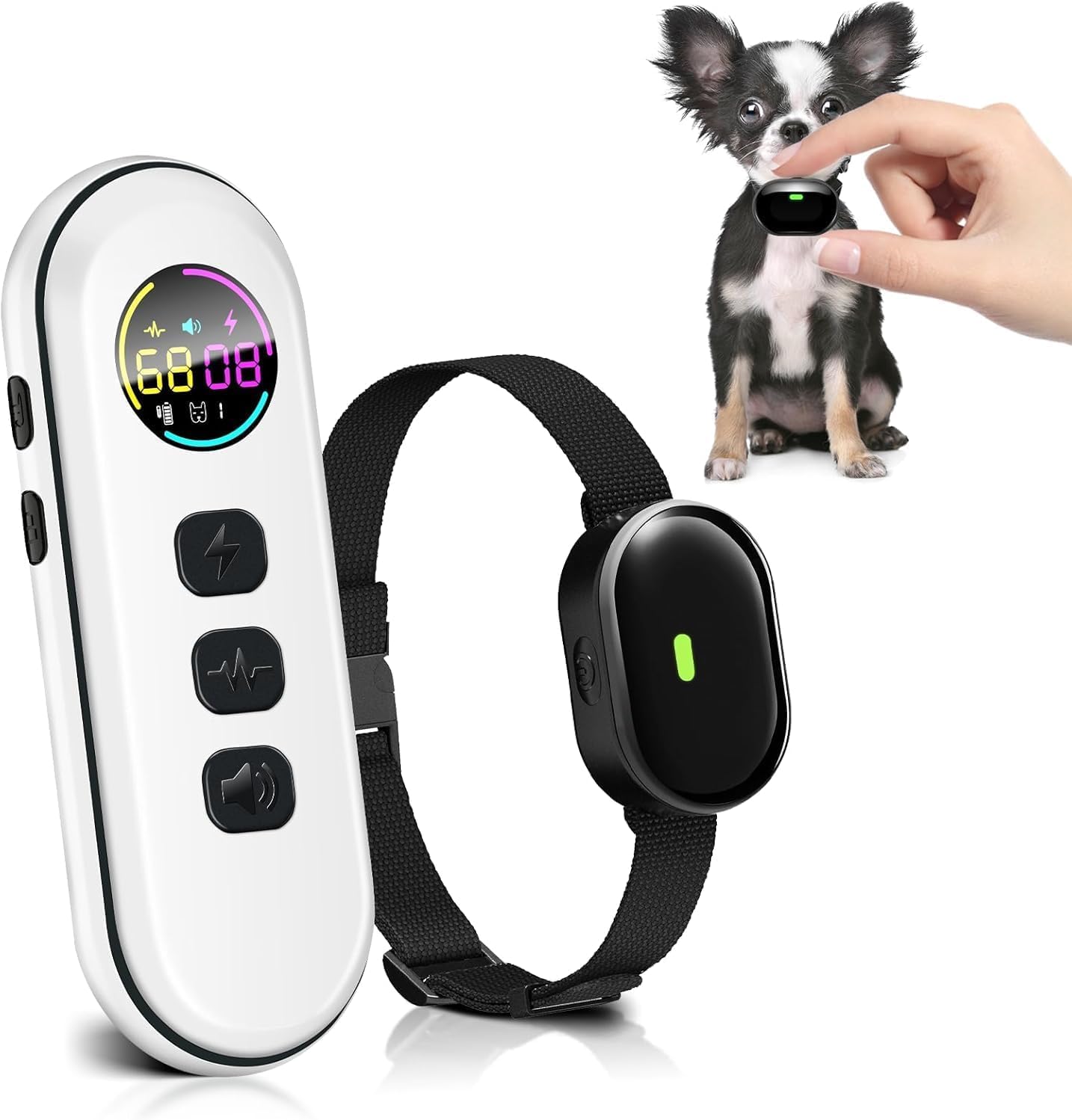
Weighing just 0.8 oz and fitting necks as small as 6 inches, the Chupolik collar is purpose-built for tiny dogs without sacrificing control. With 198 levels across sound, vibration, and static, owners can fine-tune stimulation precisely for their dog's size and sensitivity — a level of adjustability rarely seen at this price point.

This collar is ideal for first-time e-collar users with small breeds down to 5 lbs who want a safe, adjustable training tool without the premium price tag. Battery life under daily use may be shorter than the advertised 15 days, so expect to charge every few days — a manageable tradeoff for the weight and fit advantages.

Keep the collar on the charger overnight if you train daily — a quick top-off maintains performance.

Bottom line: For small dog owners who prioritize a precise, lightweight collar over long battery runs, the Chupolik delivers tailored training control at an exceptional value.

3

Dogtra iQ Mini E-Collar

Dogtra iQ Mini E-Collar

Very small dogs

Our Score 8.8/10
Check Price

Worth Noting

  • Remote is water-resistant only, not fully submersible
  • Premium-priced compared to alternatives with comparable core features.
Collar Weight
4 oz
Waterproof Rating
Receiver: waterproof; Remote: water-resistant
Stimulation Levels
100
Read the full review

The Dogtra iQ Mini offers 100 nick/constant stimulation levels in a compact 4 oz receiver that expands to two dogs, making it a step up in precision and flexibility from the ultra-light top pick. Its build quality reflects the brand's professional pedigree — the receiver feels substantial without being bulky on dogs as small as 7 lbs.

This collar suits owners who need expandability and fine control for serious training, but its premium price may not appeal to casual users. The remote's water-resistant rating (not fully waterproof) means keeping it dry in wet conditions — a minor inconvenience for most.

Bottom line: For trainers who need expandability and precise levels in a compact package, the Dogtra iQ Mini delivers professional build quality at a premium price. It's best suited for small dogs 7 lbs and up where the receiver weight isn't a concern.

4

UbaNinva Ultra Compact

UbaNinva Ultra Compact

Budget basic training

Our Score 8.4/10
Check Price

Worth Noting

  • Collar may not stay snug on very short-haired or tiny-necked dogs, leading to inconsistent contact.
  • Battery may require nightly charging depending on usage frequency and stimulation levels.
Collar Weight
1.0 oz
Waterproof Rating
IPX7
Stimulation Levels
99
Read the full review

At 1.0 oz and under $30, this collar delivers IPX7 waterproofing, a 1300 ft range, and basic bark control in a lightweight package. Battery life can be shorter than advertised — some users find themselves charging nightly — and the collar may not stay snug on very short-haired or tiny-necked dogs. That makes it best for owners of small dogs (5-15 lbs) who need an occasional training aid and are willing to monitor fit and charging habits.

If the collar slides on a short-haired dog, try the included rubber contact pad or adjust strap tension for consistent contact.

Bottom line: For owners of small dogs who want an affordable training collar and can accommodate occasional charging and fit checks, this serves well for light, occasional use.

How to Choose

Collar Weight and Size

For dogs under 15 pounds, the collar receiver should weigh 1.5 ounces or less. Every extra ounce pulls the collar downward, creating a gap between the contact points and the skin. This gap reduces stimulation consistency and can cause the collar to shift sideways during movement.

Neck circumference also matters: a collar that cannot tighten below 8 inches will dangle loosely on a 5-pound dog. Look for straps that adjust down to at least 6 inches and have short contact points (under 3/8 inch) to avoid poking the throat.

Number of Stimulation Levels

Small dogs have lower tolerance for static stimulation. A collar with fewer than 50 levels forces you to jump between big increments, often skipping from 'nothing' to 'too strong.' More levels let you find the exact minimum intensity that gets a response without causing fear.

The practical sweet spot is 100 levels or more. Budge collars with 99 levels are fine; the difference from 100 is negligible. Avoid collars with fewer than 15 levels for any dog under 20 pounds.

Battery Life Consistency

Advertised battery life is almost always optimistic. Many collars claim 15-40 days but require charging every 3-7 days under daily use. The reason is that manufacturers test standby time with the transmitter off, while real use involves repeated stimulation, vibration, and tone triggers that drain the battery faster.

Check reviews for median real-world battery life rather than marketing numbers. A collar that lasts 5-7 days of moderate use is acceptable. Anything requiring nightly charging becomes a chore that undermines training consistency.

Waterproof Rating

Waterproofing is critical for outdoor training, but the rating matters. IPX7 means the receiver can be submerged in 1 meter of water for 30 minutes - enough for rain, puddles, and accidental drops in water. Some collars claim 'waterproof' without an IP rating, which often means only splash resistance.

For dogs that swim or play in wet grass, an IPX7 receiver is a minimum. Remotes are often less protected; keep them in a dry pocket or use a waterproof pouch.

Safety Lock Feature

A safety lock prevents the remote from sending stimulation when it is jostled in a pocket or pressed against a chair. Without it, accidental shocks can teach a dog to fear the collar or its owner. This is especially important for small dogs that react strongly to even mild static.

Look for a physical lock switch or a combination of button holds that must be pressed to activate. Some collars also have a safety shutoff that stops stimulation after a few seconds to prevent over-correction.

Frequently Asked Questions