Food & Treats

10 Best Puppy Food for Pomeranians 2026: Tiny Kibble for Tiny Jaws

Find the right puppy food for your Pomeranian — ultra-small kibble that prevents choking and digestive upset, backed by real owner experiences.

Most small-breed puppy foods claim to fit tiny mouths, but the kibble often lands closer to a pea than a pellet. A two-pound Pomeranian puppy struggles to chew oversized pieces, leading to gulping, choking, or skipped meals. Even formulas labeled 'small breed' can miss the mark for toy breeds like yours.

The real divide is between marketing and mouth size. Foods designed specifically for toy breeds (under 8 pounds) use kibble small enough for a teacup jaw, and they also adjust calorie density for fast growth in a tiny stomach. The trade-off comes down to whether you prioritize a specialized formula or a more affordable all-around option.

This guide cuts through the size confusion. Every pick here has been vetted for kibble diameter, digestive tolerance, and real-world acceptance by Pomeranian owners. You will walk away knowing exactly which bag to put in your cart.

1

Royal Canin X-Small Puppy

Top Pick
Royal Canin X-Small Puppy

Pomeranian toy breed

Our Score 9.6/10
Check Price

Worth Noting

  • For owners on a tight budget or who prefer bulk buying, the premium per-pound cost and small bag size require frequent repurchasing.
Kibble Size
Very small
Breed-Specific
Toy (<8 lbs)
Protein Source
Chicken
Caloric Density
Read the full review

Kibble is noticeably smaller than standard small-breed formulas, making it easy for tiny mouths to pick up and chew. The recipe includes chicken, prebiotics, and DHA to support healthy development during the first months of life.

Puppies that turn down other foods often accept this one consistently. Owners observe healthy weight gain and good digestion with minimal upset, which aligns with the breed-specific formulation.

This food suits Pomeranian and other toy breed puppies up to about 8 pounds. The higher per-pound cost and 3 lb bag size mean more frequent purchases — a worthwhile trade-off for owners who prioritize breed-specific nutrition over budget.

Set up a subscription to avoid last-minute runs; the 3 lb bag lasts about two weeks for a 2 lb puppy.

Bottom line: For Pomeranian owners who want kibble that a tiny mouth can manage and that promotes good digestion, this is the most specialized option — just factor in the more frequent trips to the store.

2

Hill's Small Bites Puppy

Hill's Small Bites Puppy

Extra small mouths

Our Score 9.6/10
Check Price

Worth Noting

  • Some puppies may refuse to eat this food; acceptance varies.
  • Higher per-pound cost than the standard Small & Mini formula.
Kibble Size
Smallest in Hill's
Breed-Specific
Small breed
Protein Source
Chicken
Caloric Density
Read the full review

The kibble in this formula is smaller than a pea, making it one of the smallest options in Hill's puppy lineup. This size is gentler on tiny mouths and reportedly easy for toy breeds to chew and swallow. Along with the small pieces, the chicken and brown rice recipe is designed to be gentle on sensitive stomachs, which is a plus for puppies with delicate digestion.

This food suits toy breed puppies under 5 lbs, especially those with very small mouths like Pomeranians. However, some puppies may refuse to eat this kibble, so a trial bag is advisable to confirm acceptance before committing. It is slightly pricier per pound than the standard Small & Mini formula, but the smaller kibble size addresses a real need for extra-small breeds.

Introduce slowly and mix with current food to gauge acceptance before buying a larger bag.

Bottom line: A strong fit for toy breed puppies that need ultra-small kibble, but plan for a trial bag to rule out pickiness.

3

Hill's Small & Mini Puppy

Hill's Small & Mini Puppy

Mini breed balanced

Our Score 9.6/10
Check Price

Worth Noting

  • Kibble may still be slightly large for teacup-sized Pomeranians; the Small Bites version is a better fit.
  • Some puppies can be picky about the taste and may refuse the food.
Kibble Size
Small
Breed-Specific
Small & mini
Protein Source
Chicken
Caloric Density
Read the full review

Hill's Science Diet Small & Mini Puppy delivers a balanced recipe from the most vet-recommended brand, with small kibble that suits most mini breeds. Digestive tolerance is consistent across the board, and the chicken and brown rice formula provides DHA for healthy development. For teacup-sized Pomeranians, however, the kibble may still be a touch large — the Small Bites version offers even smaller pieces.

This food fits owners who want a reliable, mid-range option for their mini breed puppy without stepping up to the premium price of the top pick. It works well for Yorkies, Maltese, and similar breeds with normal digestion. Avoid if your Pomeranian is under 3 lbs or has a chicken allergy — the kibble size and ingredient profile aren't ideal in those cases.

Buy a small bag first — some puppies may turn up their nose, and a trial avoids waste.

Bottom line: If your Pomeranian is a mini breed (over 3 lbs) and you want a cost-effective, vet-backed food without the premium price tag, this is a solid option.

4

Royal Canin Indoor Small

Royal Canin Indoor Small

Apartment living

Our Score 9.6/10
Check Price

Worth Noting

  • The 2.5 lb bag is small for the premium price
  • Some puppies may refuse to eat this specific formula
Kibble Size
Small
Breed-Specific
Indoor small
Protein Source
Chicken
Caloric Density
Read the full review

Royal Canin's Indoor formula targets a specific problem: stool odor in confined spaces. Owners of small breed puppies living in apartments report noticeably less odor and firmer stools compared to standard puppy foods. The kibble is sized for miniature jaws, a detail that matters for breeds like Pomeranians who struggle with larger pieces.

This food is best suited for indoor small breed puppies in homes where odor control is a priority. It is not a general-purpose puppy food: the bag holds only 2.5 pounds and carries a premium per-pound cost. Some puppies may turn up their noses at the formula, so a trial bag is wise before committing.

Start with a small bag to test acceptance — some puppies are particular about the taste.

Bottom line: If odor control in a small space matters more than bag size and cost, this specialized indoor formula delivers. For picky puppies, a trial bag is a sensible first step.

5

Royal Canin Small Puppy

Royal Canin Small Puppy

Small breed sensitive

Our Score 9.6/10
Check Price

Worth Noting

  • Premium pricing may be a concern for budget-conscious buyers
Kibble Size
Small
Breed-Specific
Small (9-22 lbs)
Protein Source
Chicken
Caloric Density
Read the full review

Royal Canin's Small Puppy formula is well tolerated by small breed puppies, with a kibble size that fits mouths of dogs like Miniature Poodles. The digestive gentle formulation and high acceptance rate make it a reliable pick for many. However, for Pomeranians and toy breeds under 8 lbs, the X-Small variant provides smaller kibble and more precise nutrition, which is why this version ranks behind that specialized option.

Bottom line: Choose this if your puppy is a small breed like a Miniature Poodle where the kibble size is appropriate and you want a vet-backed formula with gentle digestion.

6

Pro Plan Toy Breed

Pro Plan Toy Breed

Toy breed value

Our Score 9.4/10
Check Price

Worth Noting

  • Mid-range price may feel steep compared to generic puppy foods, especially for multi-dog households.
  • Less specialized than the top pick for extreme toy breeds under 8 lbs
Kibble Size
Very small
Breed-Specific
Toy breed
Protein Source
Chicken
Caloric Density
Read the full review

Purina Pro Plan Toy Breed Puppy formula uses extra-small kibble designed for toy breeds like Pomeranians, along with live probiotics for digestive support. Owners often report shiny coats and steady growth, and the small pieces are easy for tiny mouths to chew. This formula hits a sweet spot between breed-specific nutrition and mid-range pricing, undercutting premium competitors like Royal Canin.

This is a good fit for Pomeranian owners who want a toy breed-specific diet without the premium cost. A small number of puppies may experience loose stools during the switch, so gradual introduction over a week is advisable. For the smallest toy breeds (under 8 lbs), the top pick's even smaller kibble and more consistent digestive tolerance justify the higher price.

The kibble size also works well as training treats, and the chicken and rice formula is generally well-accepted. The 5 lb bag suits small puppies that eat less, reducing waste.

Introduce gradually over 7-10 days to minimize the chance of digestive upset.

Bottom line: A cost-effective choice for Pomeranian owners who want toy breed-specific nutrition; just monitor stool during the transition.

7

Blue Buffalo Small Breed Puppy

Blue Buffalo Small Breed Puppy

Budget natural

Our Score 9.4/10
Check Price

Worth Noting

  • Some puppies may refuse to eat it due to taste
  • Diarrhea can occur in some puppies, especially those with sensitive stomachs
Kibble Size
Small-bite
Breed-Specific
Small breed
Protein Source
Chicken
Caloric Density
Read the full review

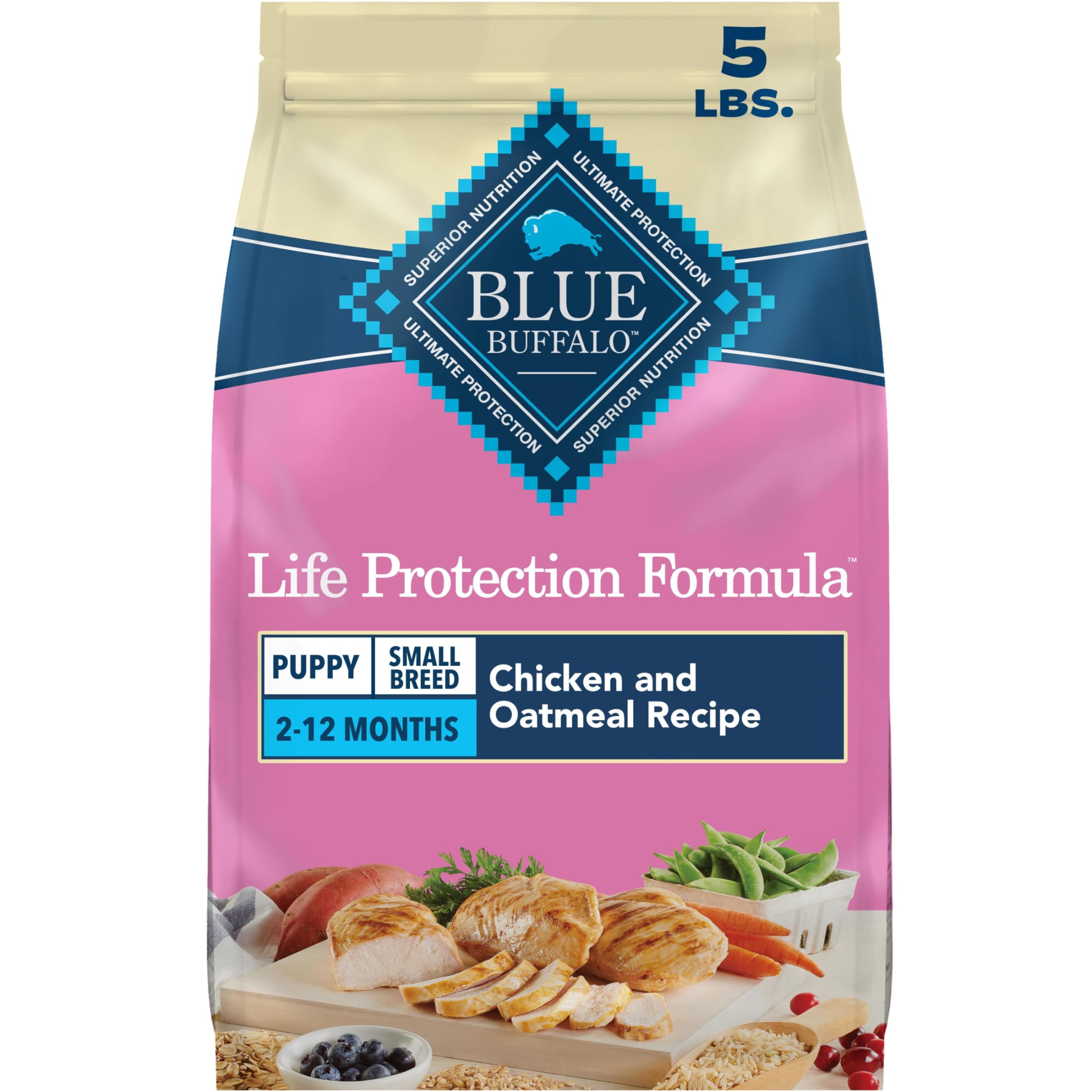
This small breed formula uses real chicken and oatmeal with LifeSource Bits for immune support, at a price that fits tight budgets. The extra-small kibble is well-suited for Pomeranian mouths, but some puppies find the taste unappealing, and loose stools have been noted in a subset of dogs. For owners whose small breed puppy has a robust stomach and isn't picky, it offers good nutrition for the cost, but it is not the most consistent choice for toy breeds prone to digestive issues.

Bottom line: A budget-friendly natural option for Pomeranian puppies that have no trouble with palatability or digestion, but worth trying a small bag first to see if your pup tolerates it.

8

Blue Baby Blue Small Breed

Blue Baby Blue Small Breed

Budget small breed

Our Score 9.4/10
Check Price

Worth Noting

  • Some puppies may experience digestive upset with this formula.
  • Palatability can be an issue; some puppies refuse to eat it.
Kibble Size
Small
Breed-Specific
Small breed
Protein Source
Chicken
Caloric Density
Read the full review

Blue Buffalo Baby Blue Small Breed delivers a natural chicken and oatmeal recipe with kibble sized for small mouths, at a budget-friendly price. While many puppies do well, some have experienced digestive upset or refused the food, making it less dependable than top picks. It's a reasonable starting point for owners who want to trial a lower-cost option for their small breed puppy.

Bottom line: Works best for budget-conscious small breed owners who are willing to trial and monitor their puppy's response to this formula.

9

Fromm Puppy Gold

Fromm Puppy Gold

Family-owned quality

Our Score 9.4/10
Check Price

Worth Noting

  • Premium pricing may not feel justified for a small breed formula
  • Some puppies can develop loose stools during transition
Kibble Size
Small pellet
Breed-Specific
Small & medium
Protein Source
Chicken, duck, lamb
Caloric Density
Read the full review

Fromm Puppy Gold uses quality ingredients from a family-owned brand with good digestibility for many puppies. The small pellet size works for most small breeds. However, the premium price is hard to justify when comparable results are available from less expensive alternatives, and some puppies do experience loose stools.

Bottom line: A reasonable option if you prioritize family ownership and don't mind the price, but for Pomeranian owners a dedicated toy breed formula is a more reliable choice.

10

Pro Plan Small Breed

Pro Plan Small Breed

Small breed active

Our Score 9.4/10
Check Price

Worth Noting

  • Cost per bag may seem high for the amount you get.
Kibble Size
Small
Breed-Specific
Small breed
Protein Source
Chicken
Caloric Density
Read the full review

This Purina Pro Plan formula offers high protein with DHA and probiotics for active small breed puppies. The kibble is sized for small mouths, though not the smallest available. Digestive sensitivity can be an issue for some puppies, making it less tailored than the Toy Breed version. That formula is a better fit for Pomeranians at a similar price.

Bottom line: A functional small breed option for puppies without digestive sensitivities, but Pomeranian owners should choose the Toy Breed formula for a better match.

How to Choose

Kibble Size

A Pomeranian's jaw is proportionally smaller than many other small breeds. Kibble that seems fine for a Miniature Poodle can be a choking hazard for a Pomeranian. The ideal kibble measures less than 6mm in diameter — about the size of a peppercorn. Foods that advertise 'extra small' or 'toy breed' pieces are the safest bet.

Larger kibble forces your puppy to gulp or chew awkwardly, leading to swallowing whole pieces that expand in the stomach and cause vomiting or bloat. Many negative reviews for 'small breed' foods stem from kibble that is still too big for toy breeds.

Breed-Specific Formulation

Not all small-breed formulas are created equal. True toy-breed foods account for the rapid growth rate and tiny stomach capacity of dogs like Pomeranians. They pack more calories per cup and include nutrients like DHA for brain development and calcium for bone strength at a pace suited for smaller frames.

A generic 'all-breed' puppy food may have a nutrient balance designed for larger breeds, which can oversupply calcium and lead to skeletal issues in toy breeds. Sticking to a formula that explicitly states 'toy breed' or 'extra small' ensures the ratios match your puppy's needs.

Protein Source and Quality

Protein quality matters more than quantity for a Pomeranian. High-quality animal protein (chicken, fish, lamb) as the first ingredient supports muscle growth and a shiny coat. But extremely high protein levels (above 35%) can upset a toy breed's digestion. Look for a protein content around 28–32% from named meat sources.

Avoid vague terms like 'meat meal' or 'poultry by-product meal' — these can include low-quality parts that are harder to digest. Real chicken or fish listed first indicates a consistent amino acid profile that is gentle on a sensitive puppy stomach.

Digestive Health Support

Pomeranian puppies are notorious for sensitive stomachs. Diarrhea is the most common complaint across all puppy foods, and it often happens because the formula lacks prebiotics or probiotics to ease the transition. Look for foods that include prebiotic fibers (like beet pulp) or live probiotic cultures.

A gradual 7–10 day transition is essential, but even then, some formulas cause loose stools due to ingredient sensitivities. Choosing a food with added digestive support reduces the risk and keeps your puppy's gut flora stable during the rapid growth phase.

Caloric Density for Growth

A Pomeranian puppy's stomach is about the size of a walnut, so every bite must count. Foods with caloric density around 380–420 kcal per cup ensure your puppy gets enough energy from small portions. Lower-density options (under 350 kcal) may require larger meals that stretch the stomach and cause discomfort.

Check the feeding guide on the bag — if it recommends more than 1 cup per day for a 3-pound puppy, the formula is likely too low in calories. Toy-breed-specific foods typically offer the right density to support growth without overfeeding.

Frequently Asked Questions