Food & Treats

9 Best Puppy Food for Labrador Retrievers 2026: Test First, Buy Big

Labrador puppies often have sensitive stomachs. Find the best puppy food for Labrador Retrievers that your pup will tolerate and thrive on.

Labrador puppies are notorious for having sensitive stomachs — diarrhea is the most frequently reported issue across every puppy food brand, regardless of price. Even top-rated formulas can cause loose stools if introduced too quickly.

The real challenge isn't finding a 'good' food; it's finding one your particular puppy tolerates. A slow, 7- to 10-day transition is non-negotiable, and starting with a small bag before committing to a 30-pound sack can save money and frustration.

This guide prioritizes large breed specific formulas with controlled calcium and glucosamine for joint health, while acknowledging that individual tolerance will ultimately determine the best fit. Test first, then invest.

1

Purina Pro Plan Large Breed 34 lb

Top Pick
Purina Pro Plan Large Breed 34 lb

Large breed growth

Our Score 9.4/10
Check Price

Worth Noting

  • Digestive tolerance varies
  • May not suit puppies with extreme digestive sensitivity to chicken or grains
Cost/lb
Mid
Breed Formula
Large breed specific
Digestion Risk
Moderate
Protein Source
Chicken first
Read the full review

This formula is built around the specific needs of large breed puppies: glucosamine for joint development, DHA for brain and vision, and calibrated calcium to avoid rapid skeletal growth. Lab owners report shiny coats, bright eyes, and steady weight gain — signs that the nutritional profile matches what these pups require.

Ideal for Labrador puppies that need measured growth support without over-supplementation. The digestive side effect — loose stools or vomiting during the first week — is manageable with a slow transition over 7–10 days. Pups with extremely sensitive stomachs may do better on a limited ingredient option if symptoms persist.

Transition over 7–10 days by gradually increasing the proportion of this food to avoid digestive upset.

Bottom line: Labrador owners who prioritize breed-specific growth control and are willing to manage a thoughtful food transition will find this bag delivers consistent results.

2

IAMS Large Breed Puppy 30.6 lb

IAMS Large Breed Puppy 30.6 lb

Budget large breed

Our Score 9.4/10
Check Price

Worth Noting

  • Digestive upset, including diarrhea and vomiting, can occur in some puppies
Cost/lb
Low
Breed Formula
Large breed specific
Digestion Risk
High
Protein Source
Chicken first
Read the full review

IAMS offers the most affordable large breed puppy formula per pound, including DHA for brain development. However, the recipe has been linked to digestive upset in some puppies, making it a budget option best suited for owners who can test tolerance and monitor closely.

Transition over at least 10 days and watch for loose stools – if they appear, this formula may not be suitable.

Bottom line: Budget-conscious Labrador owners who can closely monitor their puppy's adjustment will find this the most cost-effective large breed option, but a smoother-digesting formula is worth the extra cost for sensitive stomachs.

3

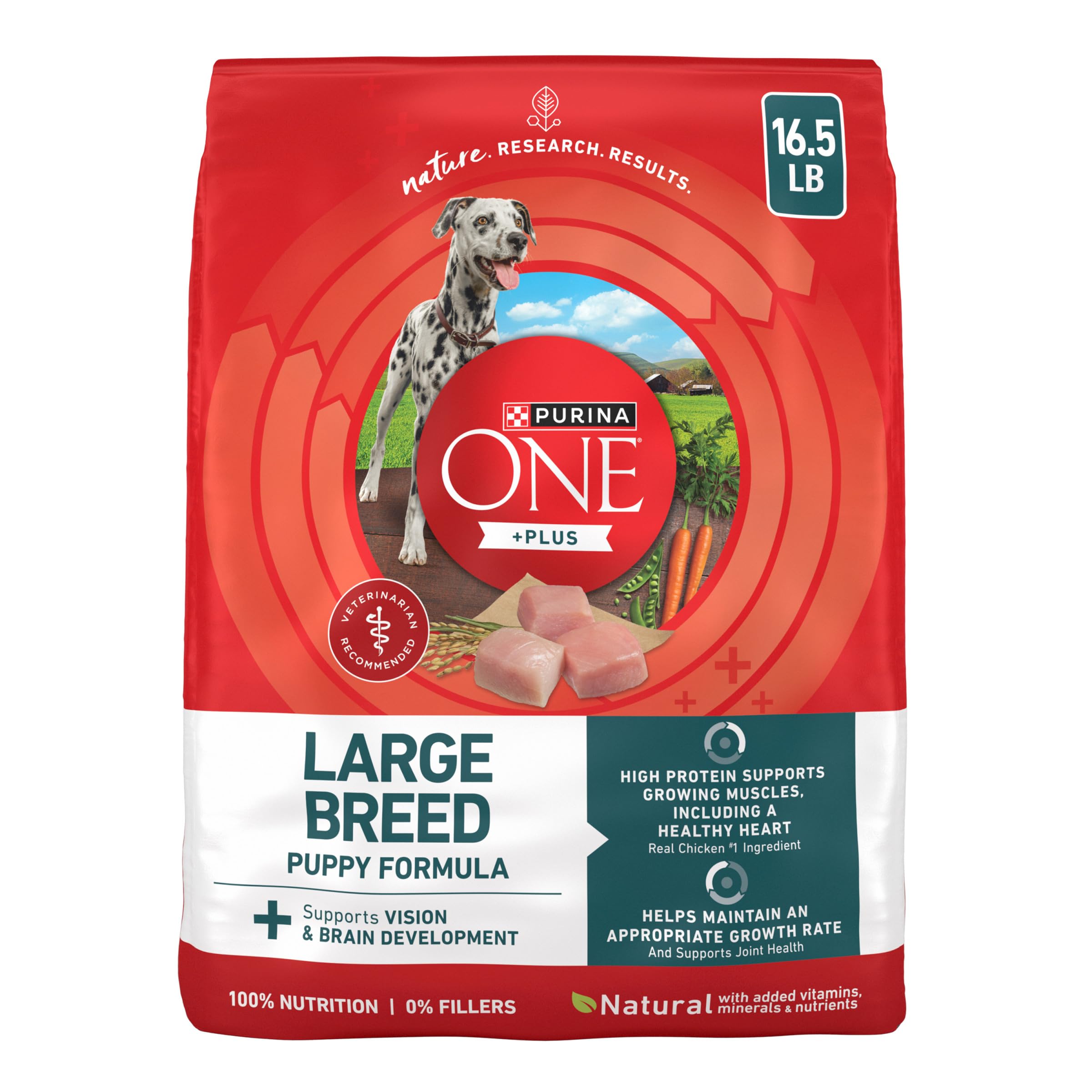
Purina ONE Large Breed 16.5 lb

Purina ONE Large Breed 16.5 lb

Mid-price joint support

Our Score 9.4/10
Check Price

Worth Noting

  • Some puppies experience diarrhea or vomiting; introduce the food slowly.
  • Some dogs may refuse to eat this formula
Cost/lb
Mid
Breed Formula
Large breed w/ glucosamine
Digestion Risk
Moderate
Protein Source
Chicken first
Read the full review

This Purina ONE formula provides glucosamine for large breed puppy joints at a moderate price. It bridges the gap between budget brands like IAMS and premium formulas like Pro Plan, though it lacks the advanced calcium control of the top pick. Suitable for owners wanting breed-specific joint support without the premium spend, but palatability can be inconsistent and some puppies develop digestive upset – starting with a small bag is advisable.

Transition slowly over 7-10 days to reduce risk of digestive upset.

Bottom line: For owners who want glucosamine at a mid-range price, this is a solid option – but start with a small bag to check tolerance.

4

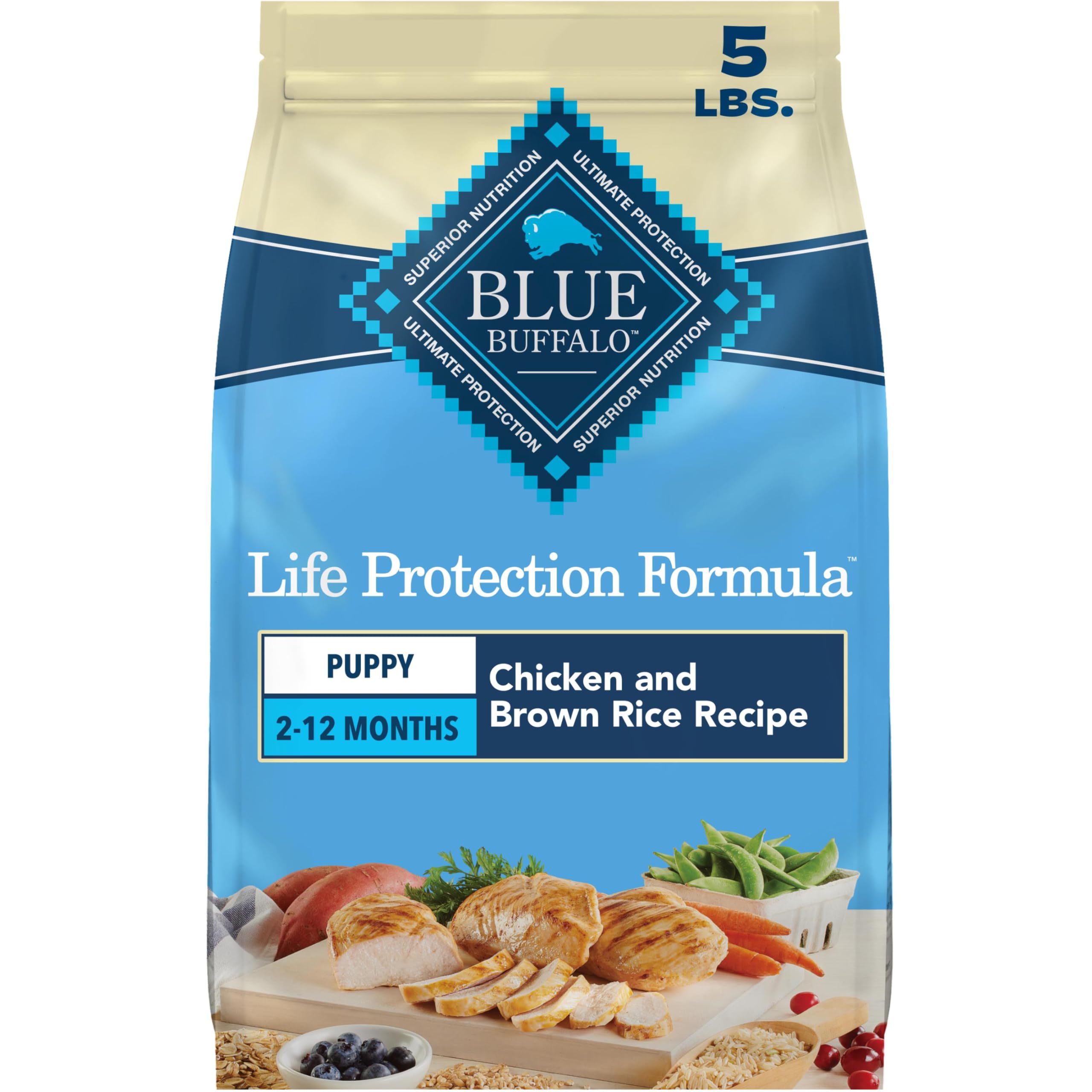
Blue Buffalo Life Protection Puppy 5 lb

Blue Buffalo Life Protection Puppy 5 lb

Natural ingredients

Our Score 9.4/10
Check Price

Worth Noting

  • Some puppies may experience loose stools during the transition period
Cost/lb
High
Breed Formula
All-breed (not Lg)
Digestion Risk
High
Protein Source
Chicken first
Read the full review

Blue Buffalo Life Protection Formula stands out for its clean ingredient list — real chicken first, no poultry by-products, and LifeSource Bits for antioxidants. It’s a solid option for owners who want to avoid fillers like corn, wheat, or soy. However, this is an all-breed formula, not a large breed specific one, so it lacks the controlled calcium and glucosamine needed for Labrador hip and joint development.

This food suits single-puppy households or as a trial bag. The 5 lb size keeps the per-pound cost higher than bulk bags, but the quality ingredients and high palatability make it a fair mid-range choice. The main tradeoff is digestive tolerance: some puppies may develop loose stools if the transition isn’t gradual. Owners willing to monitor that adaptation closely will find a nutritious, grain-inclusive option.

Transition over 7–10 days by mixing increasing amounts with the current food to reduce digestive upset.

Bottom line: For Labrador owners who prioritize natural ingredients over breed-specific joint support and are prepared for a careful transition, this is a capable all-breed puppy food.

5

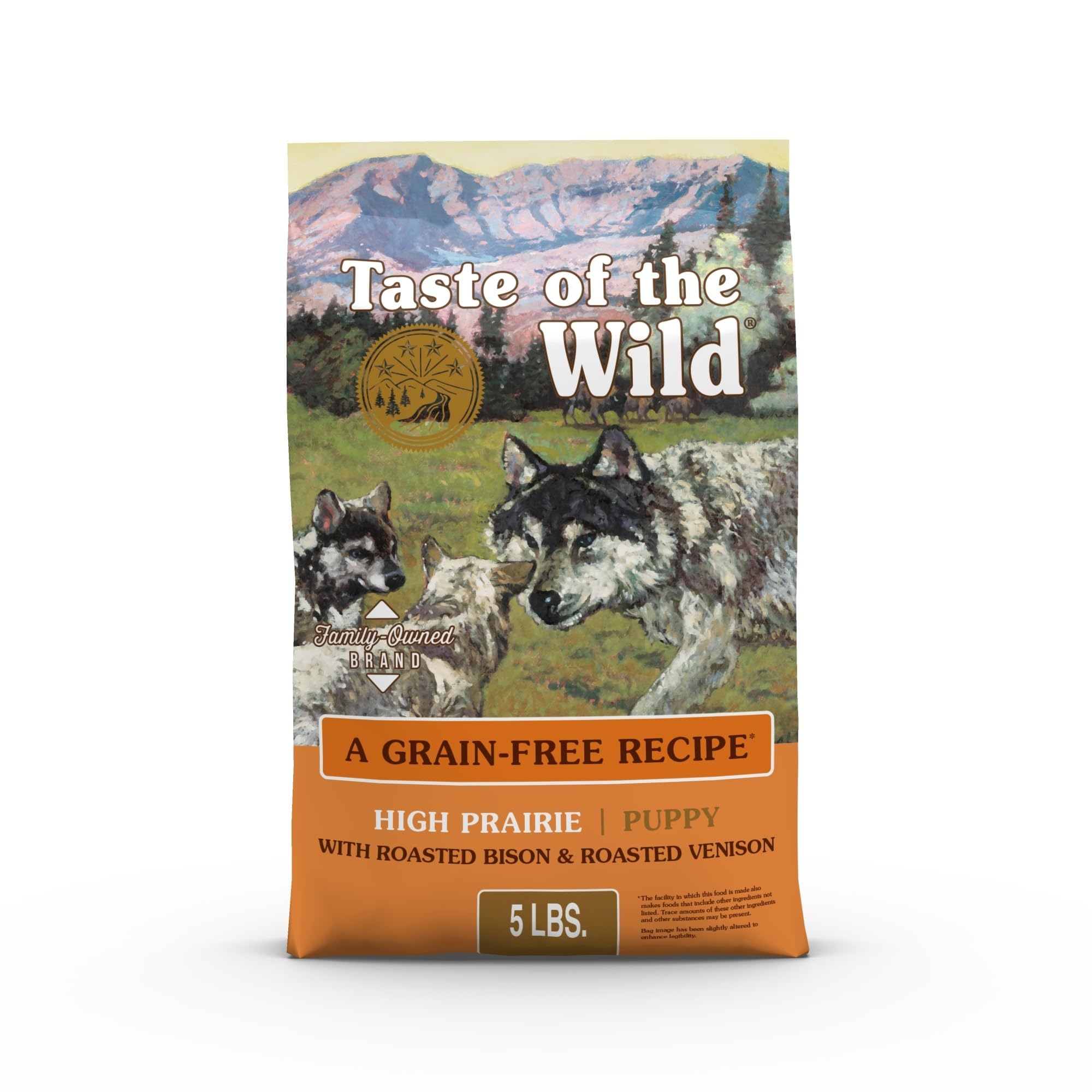
Taste of the Wild Puppy 5 lb

Taste of the Wild Puppy 5 lb

Grain-free allergies

Our Score 9.4/10
Check Price

Worth Noting

  • Cost per pound is high
  • Some puppies may refuse the taste or experience loose stools; a slow transition is recommended.
Cost/lb
Very High
Breed Formula
All-breed, grain-free
Digestion Risk
Moderate
Protein Source
Bison & Venison
Read the full review

Bison and venison as first ingredients and a limited ingredient list make this a targeted option for puppies with grain or chicken sensitivities. Unlike the top pick’s large breed formula, this recipe prioritizes allergen avoidance over joint support, so it’s a specialist tool rather than a general growth food.

This works best for owners of puppies with confirmed grain or chicken allergies who are willing to pay a premium per pound. The small bag size means it’s not economical for larger appetites — a growing Labrador will burn through it quickly. Occasional palatability issues and digestive sensitivity have been noted, so start with a small bag to test tolerance.

Introduce this food gradually over several days to see how your puppy handles the novel proteins.

Bottom line: Reach for this if your puppy has grain or chicken allergies and you’re okay with a higher per-pound cost. For a healthy Labrador on a budget, the top pick offers more economical large breed nutrition.

6

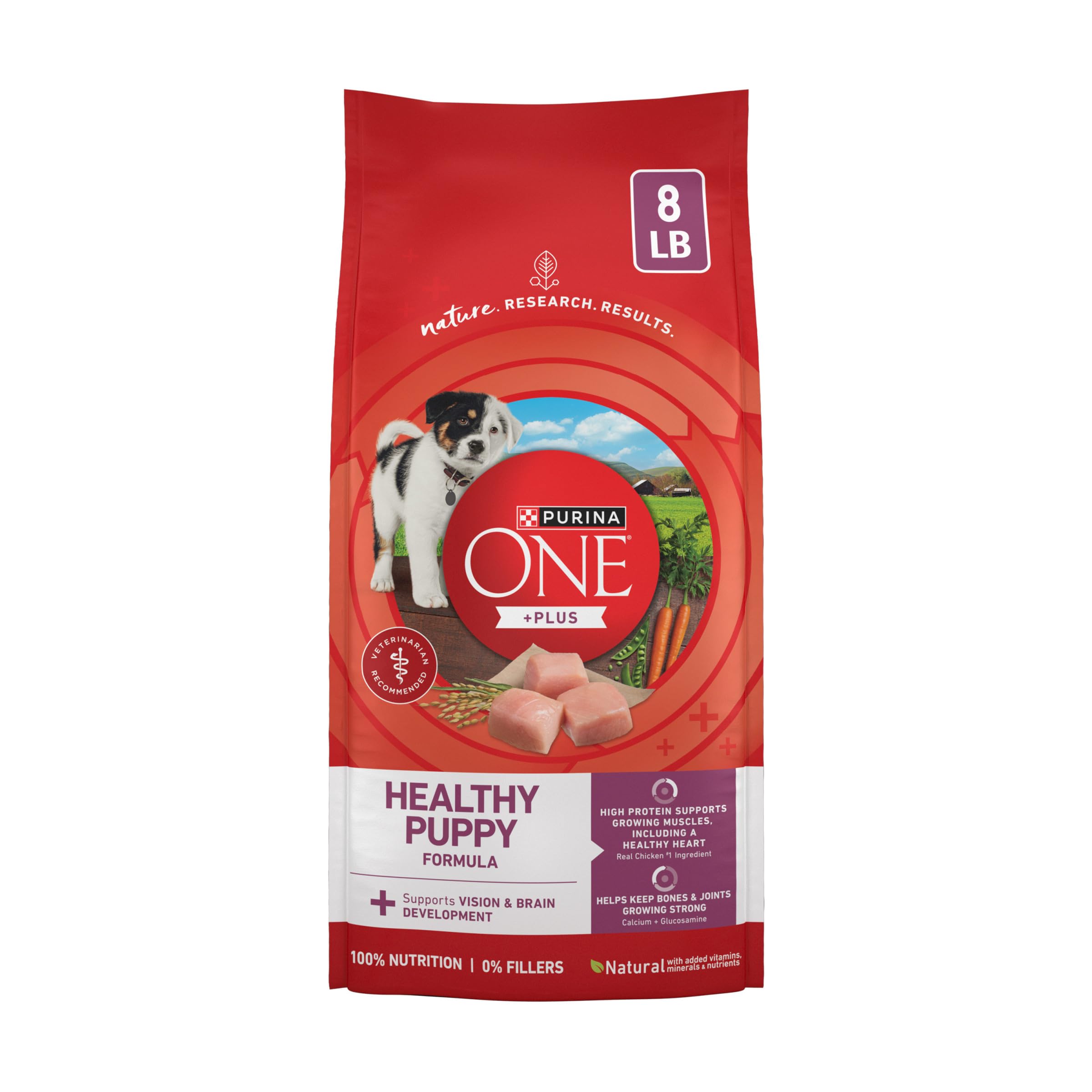
Purina ONE Plus Puppy 8 lb

Purina ONE Plus Puppy 8 lb

General value

Our Score 9.4/10
Check Price

Worth Noting

  • Some puppies may develop loose stools during the transition period.
Cost/lb
Low
Breed Formula
All-breed
Digestion Risk
Moderate
Protein Source
Chicken first
Read the full review

Purina ONE Plus delivers solid nutrition at a budget-friendly price, with real chicken as the first ingredient and DHA for development. However, it isn't formulated for large breed growth rates, so Labrador puppies may benefit from a size-specific option instead. Some puppies can experience digestive upset, making gradual transition important.

Bottom line: Works as a budget-friendly backup or transition food for Labrador puppies, but a large breed specific formula better supports their growth needs.

7

Purina Pro Plan Lamb & Rice 6 lb

Purina Pro Plan Lamb & Rice 6 lb

Chicken allergy

Our Score 9.4/10
Check Price

Worth Noting

  • Small 6 lb bag results in a higher per-pound cost, not economical for large breed puppies
Cost/lb
High
Breed Formula
All-breed
Digestion Risk
Low
Protein Source
Lamb first
Read the full review

This lamb formula uses real lamb as the first ingredient, a novel protein that avoids common chicken allergens. Probiotics support digestive health during growth. The 6 lb bag's higher per-pound cost makes it less economical for large breed Labradors unless a chicken allergy requires this specific protein. Best for trial or travel, or for puppies with poultry sensitivities.

Bottom line: Choose this if your Labrador puppy has a chicken allergy and you need a small bag for transition or travel; for routine large breed feeding, the per-pound cost makes it an expensive option.

8

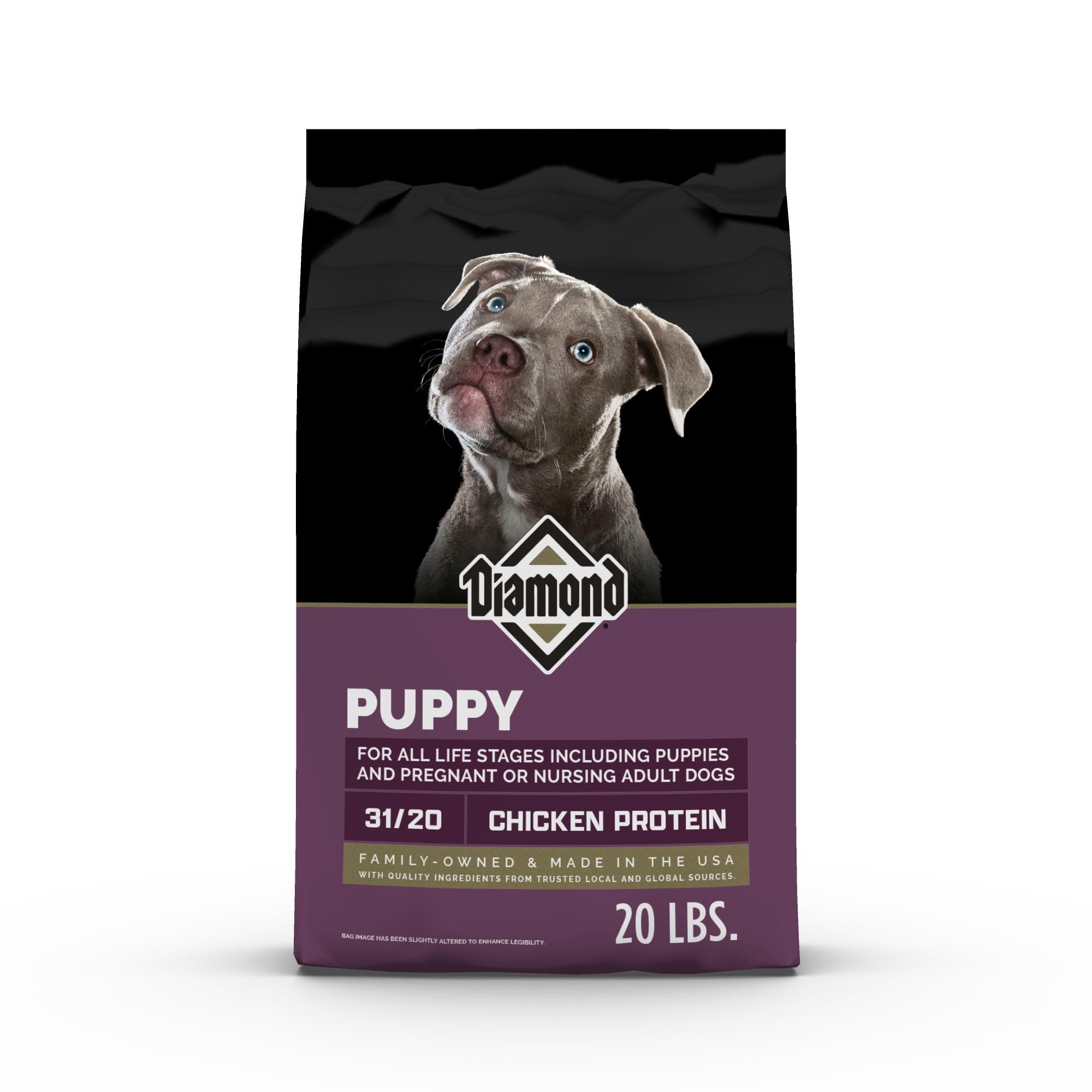
Diamond Puppy 20 lb

Diamond Puppy 20 lb

Ultra-budget

Our Score 9.2/10
Check Price

Worth Noting

  • Can cause diarrhea in some puppies; requires careful transition and monitoring
Cost/lb
Low
Breed Formula
All-breed
Digestion Risk
High
Protein Source
Chicken first
Read the full review

At roughly $1.35 per pound, this bag is the most budget-friendly option for owners feeding multiple puppies or looking to stretch a tight budget. However, some puppies develop loose stools on this formula, so a small bag trial is essential before committing to 20 pounds.

Bottom line: Worth trying only if you can afford to switch foods quickly if diarrhea occurs — ideal for multi-puppy households where cost is the priority.

9

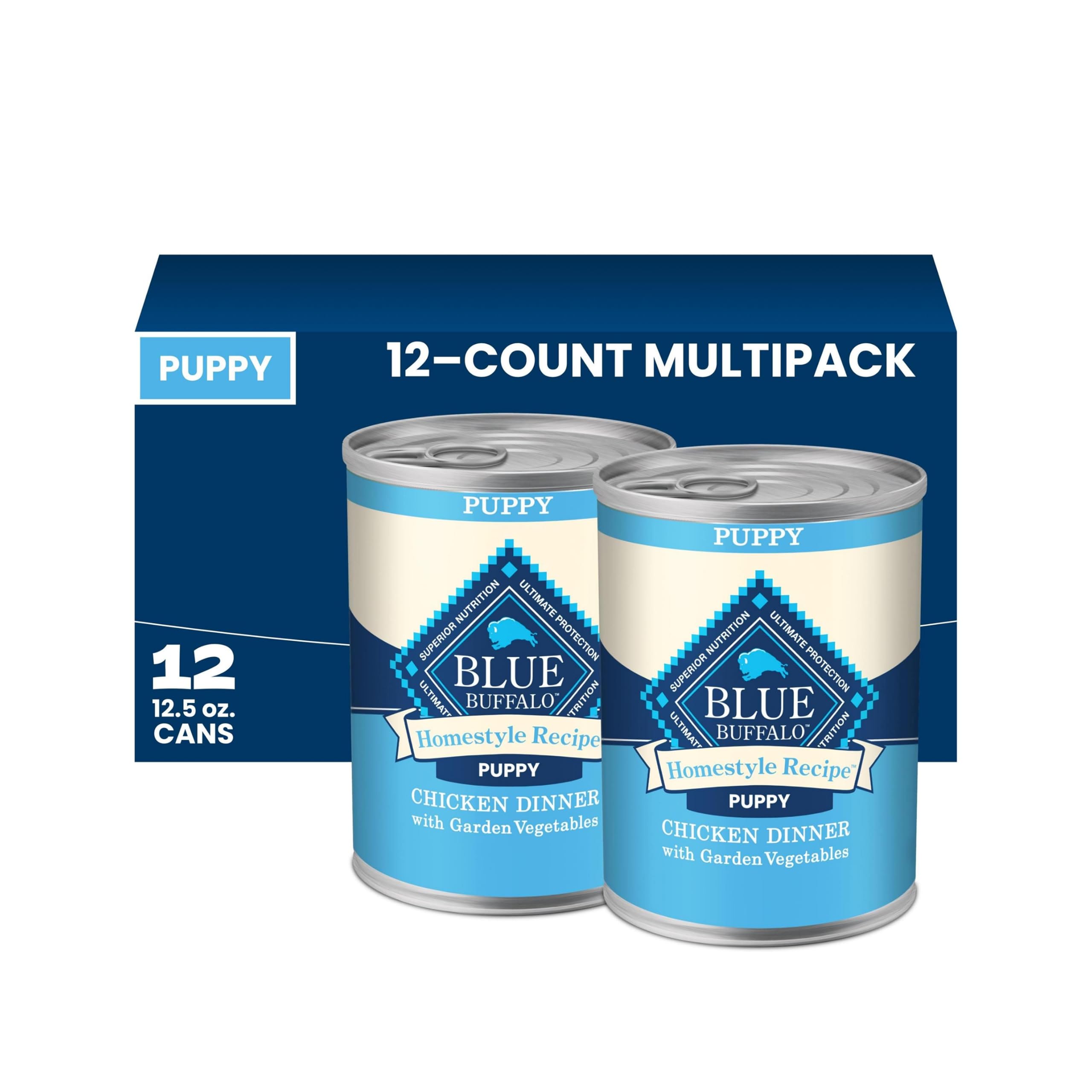
Blue Buffalo Wet Puppy 12-pack

Blue Buffalo Wet Puppy 12-pack

Picky eaters

Our Score 9.2/10
Check Price

Worth Noting

  • In a household feeding a growing Labrador puppy, the cost per can adds up quickly when used as a primary food.
Cost/lb
Very High
Breed Formula
Wet food topper
Digestion Risk
Protein Source
Chicken, vegetables
Read the full review

Real chicken and garden vegetables provide natural moisture and flavor that picky puppies enjoy, but at premium pricing per can and lacking large-breed-specific growth support, this works best as a topper or occasional meal rather than a primary diet.

Bottom line: Best suited as a wet food topper for picky puppies whose owners prioritize natural ingredients over budget.

How to Choose

Large Breed Specific Formulas

Large breed puppies like Labradors grow rapidly, and uncontrolled growth can lead to skeletal issues. Formulas labeled 'large breed' contain carefully balanced calcium and phosphorus to moderate growth rate, plus glucosamine and chondroitin for joint development.

General puppy foods may have too much calcium or accelerate growth, increasing the risk of hip dysplasia and elbow problems later in life. Stick with a formula specifically designed for large breeds to support proper bone formation.

Protein and DHA Content

Protein is essential for muscle development, but the source matters. Look for a named meat (chicken, lamb, fish) as the first ingredient — it indicates higher quality and better digestibility than generic by-products.

DHA, an omega-3 fatty acid from fish oil, supports brain and vision development during the first year. Most premium puppy foods include DHA, but check the label; some budget brands omit it or use lower-quality sources.

Kibble Size

Kibble size is often overlooked but affects how easily a puppy picks up and chews food. For Labradors, medium-sized kibble works well — small enough for puppy teeth to grip but large enough to encourage chewing rather than gulping.

Tiny kibble (like that made for toy breeds) may be inhaled whole, leading to choking or digestive upset. Very large kibble can be difficult for young puppies to crack. Most large breed formulas use a medium cut that suits Labs.

Digestive Tolerance

Diarrhea is the #1 complaint across all puppy foods, regardless of brand or price. It often results from introducing a new food too quickly, but some puppies simply react poorly to certain ingredients (chicken, grains, or specific protein sources).

A gradual 7- to 10-day transition — mixing increasing amounts of new food with the old — gives the gut microbiome time to adapt. If diarrhea persists after a slow transition, try a different protein source or a limited-ingredient diet.

Price per Pound and Bag Size

Larger bags offer a lower cost per pound, but they also increase the financial risk if the food causes digestive issues. A 30-pound bag of rejected food is a costly mistake.

The smartest strategy: buy the smallest available bag first (5-6 lbs) to test tolerance. If your puppy does well, then upgrade to a larger size. The per-pound savings are real, but only if the food actually works for your dog.

Frequently Asked Questions