Health & Wellness

14 Best Hot Spot Treatments for Dogs 2026: Active Ingredients That Actually Heal

Find the best hot spot treatments for dogs, whether your dog needs medicated spray, natural balm, or gentle silver – and avoid clogged nozzles.

Hot spot treatments come in sprays, creams, balms, and shampoos, but many owners discover too late that the spray nozzle jams, the ointment is too sticky, or the formula stings their dog’s raw skin. These practical frustrations can turn a promising product into a wasted expense.

The real decision isn’t spray versus cream — it’s matching the active ingredient to the cause of the hot spot. Hydrocortisone stops inflammation fast but can sting; chlorhexidine plus ketoconazole fights both bacteria and yeast; silver and honey provide gentle, antimicrobial care without drugs. Each approach has a different speed and a different set of trade-offs.

This guide breaks down the top treatments by how they work and where they fall short — from nozzle reliability to staying power — so you can choose the formula that fits your dog’s skin type and your own patience. The best hot spot treatment is the one you’ll actually use consistently.

1

Pet Honesty Hot Spot Spray

Top Pick
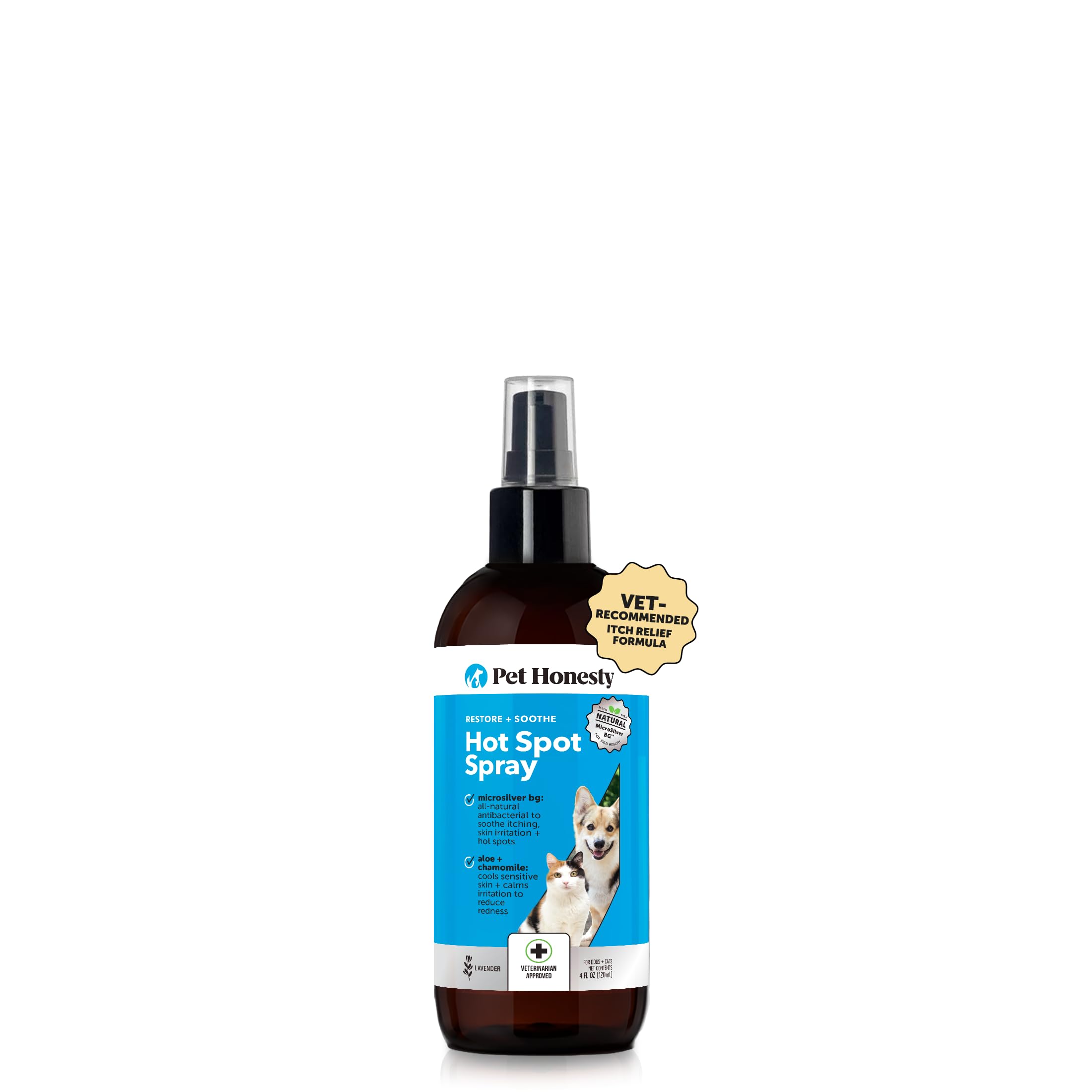
Pet Honesty Hot Spot Spray

Gentle natural spray

Our Score 9.2/10
Check Price

Worth Noting

  • Review data may be contaminated with feedback from a different variant (shampoo).
Format
Spray
Volume
4 fl oz
Sting or Alcohol
No sting (alcohol-free)
Active Ingredient
MicroSilver BG, Aloe Vera
Read the full review

This spray uses MicroSilver and aloe to calm itching and deodorize with a light lavender scent — a good match for dogs with sensitive skin or multi-pet homes where cats need a safe option. But the natural formula works slower than medicated alternatives on severe hot spots, and its review data may include feedback from a different shampoo variant, adding uncertainty for buyers expecting strict accuracy.

Bottom line: Best for owners who prioritize a gentle, natural spray for mild irritation and prefer a light scent, but not the first choice for acute, severe hot spots where faster action is needed.

2

Silver Honey Spray Gel

Silver Honey Spray Gel

Honey-silver spray

Our Score 9.2/10
Check Price

Worth Noting

  • Sticky residue can mat fur on longer-coated dogs.
Format
Spray gel
Volume
8 fl oz
Sting or Alcohol
No sting
Active Ingredient
Manuka Honey, MicroSilver
Read the full review

This spray gel delivers fast relief with natural manuka honey and MicroSilver, making it a good fit for owners who want to avoid antibiotics. The sticky residue can mat fur on longer coats, and the consistency varies between bottles — thinner or thicker than expected. Works best on short-haired dogs where stickiness is less of a concern.

Bottom line: A solid natural option for short-haired dogs or owners who prioritize honey- and silver-based ingredients over a mess-free application.

3

Silver Honey Ointment

Silver Honey Ointment

Long-lasting ointment

Our Score 9.2/10
Check Price

Worth Noting

  • Small tube size makes the per-ounce cost high, limiting use to localized spots.
Format
Ointment
Volume
2 oz
Sting or Alcohol
No sting
Active Ingredient
Manuka Honey, MicroSilver
Read the full review

This ointment stays put on hot spots and cuts, reducing the need for frequent reapplications thanks to its thick, long-lasting formula. The natural ingredients are odorless and non-irritating. However, the 2 oz tube comes at a premium price per ounce, making it best for small, stubborn spots rather than large areas or multiple wounds.

Bottom line: Choose this for targeted hot spots where staying power matters most, but not for large-area coverage or budget-limited treatment.

4

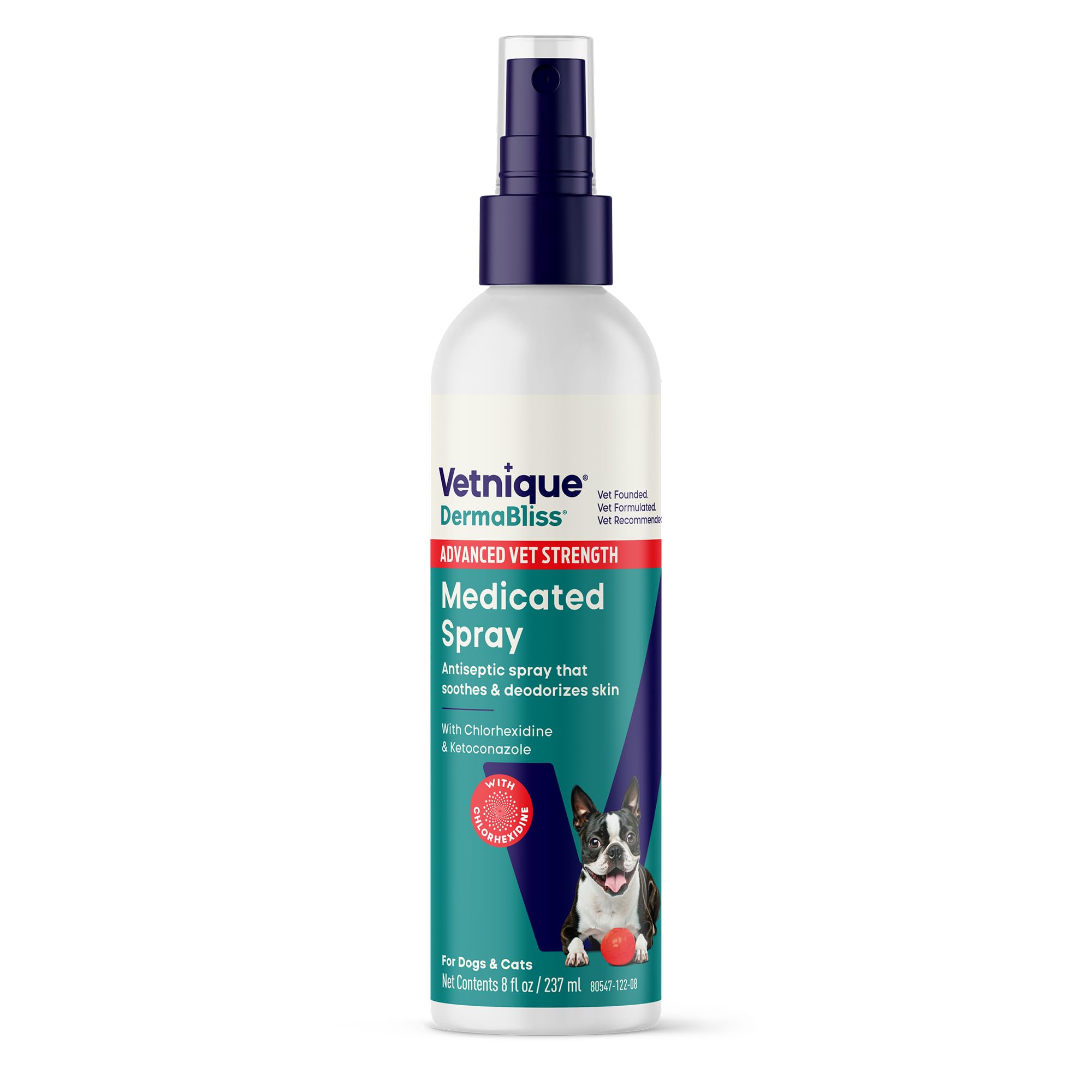
Vetnique Dermabliss Spray

Vetnique Dermabliss Spray

Yeast/bacterial spots

Our Score 9.0/10
Check Price

Worth Noting

  • Perfumey scent may be off-putting for dogs and owners sensitive to fragrances.
Format
Spray
Volume
8 fl oz
Sting or Alcohol
No sting (alcohol-free)
Active Ingredient
Chlorhexidine, Ketoconazole
Read the full review

Unlike the top pick, Vetnique Dermabliss adds ketoconazole to chlorhexidine, tackling yeast alongside bacteria - a useful edge for hot spots that don't respond to antibacterial-only sprays. This matters when the cause is fungal (yeast infection, ringworm) or when you haven't identified the underlying trigger. The alcohol-free formula doesn't sting, and aloe vera helps soothe. The tradeoff: the scent can be strong for some dogs and owners - a perfumey note that may linger. If your dog is sensitive to fragrances or you prefer scent-free treatments, this won't be your first choice.

If your dog dislikes the scent, spray onto a cloth first and dab onto the hot spot to reduce direct mist exposure.

Bottom line: Reach for this when hot spots keep coming back or look fungal - the dual coverage fills a gap that standard antibacterial sprays leave open.

5

Zymox Hydrocortisone Cream

Zymox Hydrocortisone Cream

Localized hot spots

Our Score 9.0/10
Check Price

Worth Noting

  • Small 1oz tube may not last for large areas or multiple spots
Format
Cream
Volume
1 oz
Sting or Alcohol
No sting
Active Ingredient
1% Hydrocortisone
Read the full review

Gentle 1% hydrocortisone cream that stays put and doesn't require pre-cleaning – this no-sting formula is ideal for delicate areas where your pet flinches from sprays. It heals localized hot spots, cat acne, and rashes in days. The 1-ounce tube works well for a single or small spot, but runs out quickly if you need to treat multiple or large areas. This is best for targeted use on one sensitive hotspot, not full-coverage treatment.

Apply a thin layer only; a little goes a long way, and this helps the 1oz tube last longer.

Bottom line: Best for pet owners who need a no-sting cream for a single small hot spot on a sensitive area like the face – just keep an eye on the tube size if the spot expands.

6

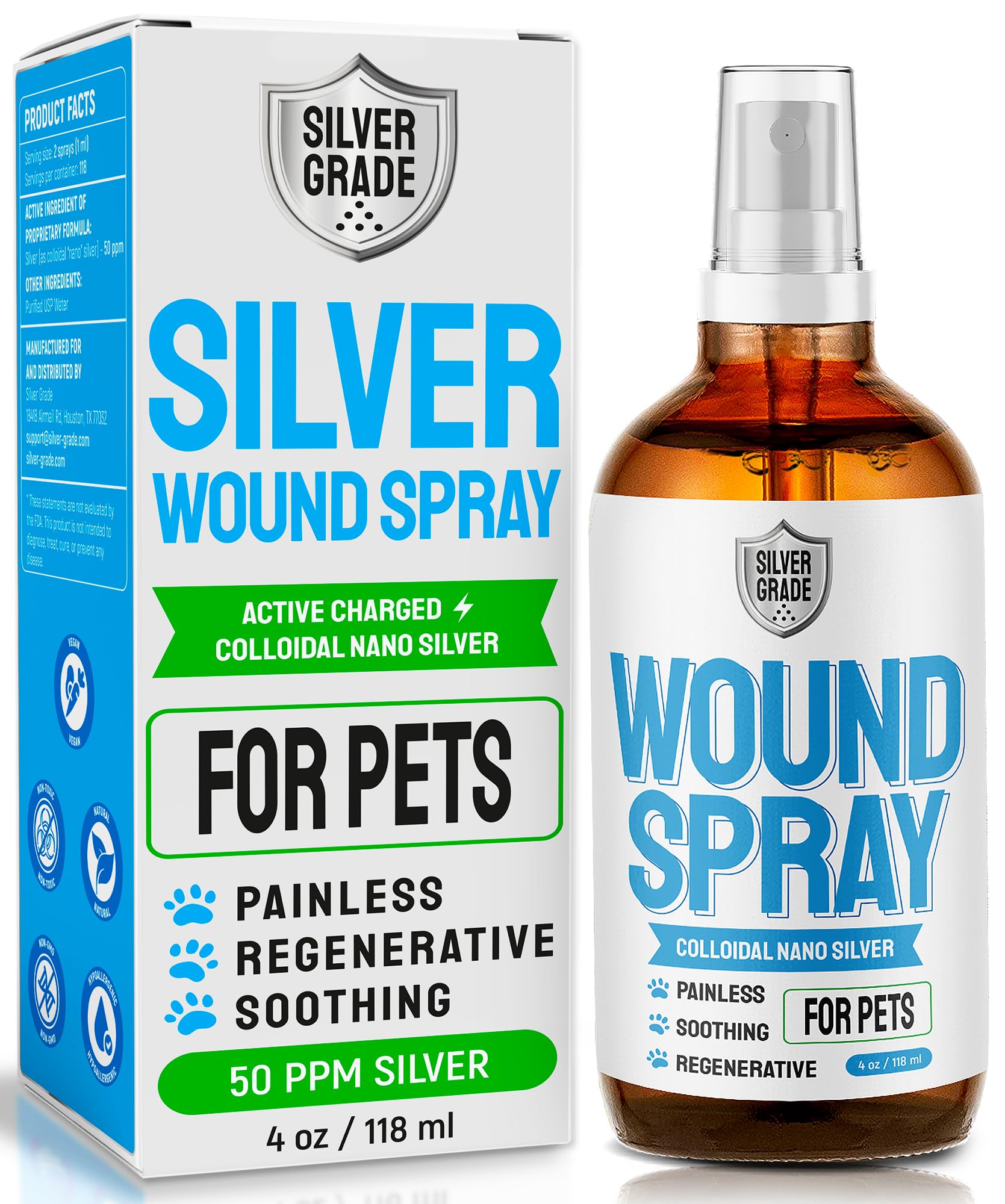
Silver Grade Colloidal Spray

Silver Grade Colloidal Spray

Chemical-free option

Our Score 9.0/10
Check Price

Worth Noting

  • May not be strong enough for serious infections or deep hot spots.
Format
Spray
Volume
4 fl oz
Sting or Alcohol
No sting
Active Ingredient
Colloidal Silver
Read the full review

This spray uses only silver and deionized water, making it safe if licked and gentle on the most sensitive skin. It won't sting, stain fur, or leave a scent. For minor cuts, hot spots in early stages, or as a between-bath refresher, it works well. However, its mildness means it lacks the strength for active infections or deep hot spots, and the premium price per ounce makes it a niche choice best suited for preventive care rather than treatment.

Bottom line: Keep this on hand for minor skin issues on sensitive dogs or as a chemical-free maintenance spray, but reach for a medicated option if hot spots are already severe or infected.

7

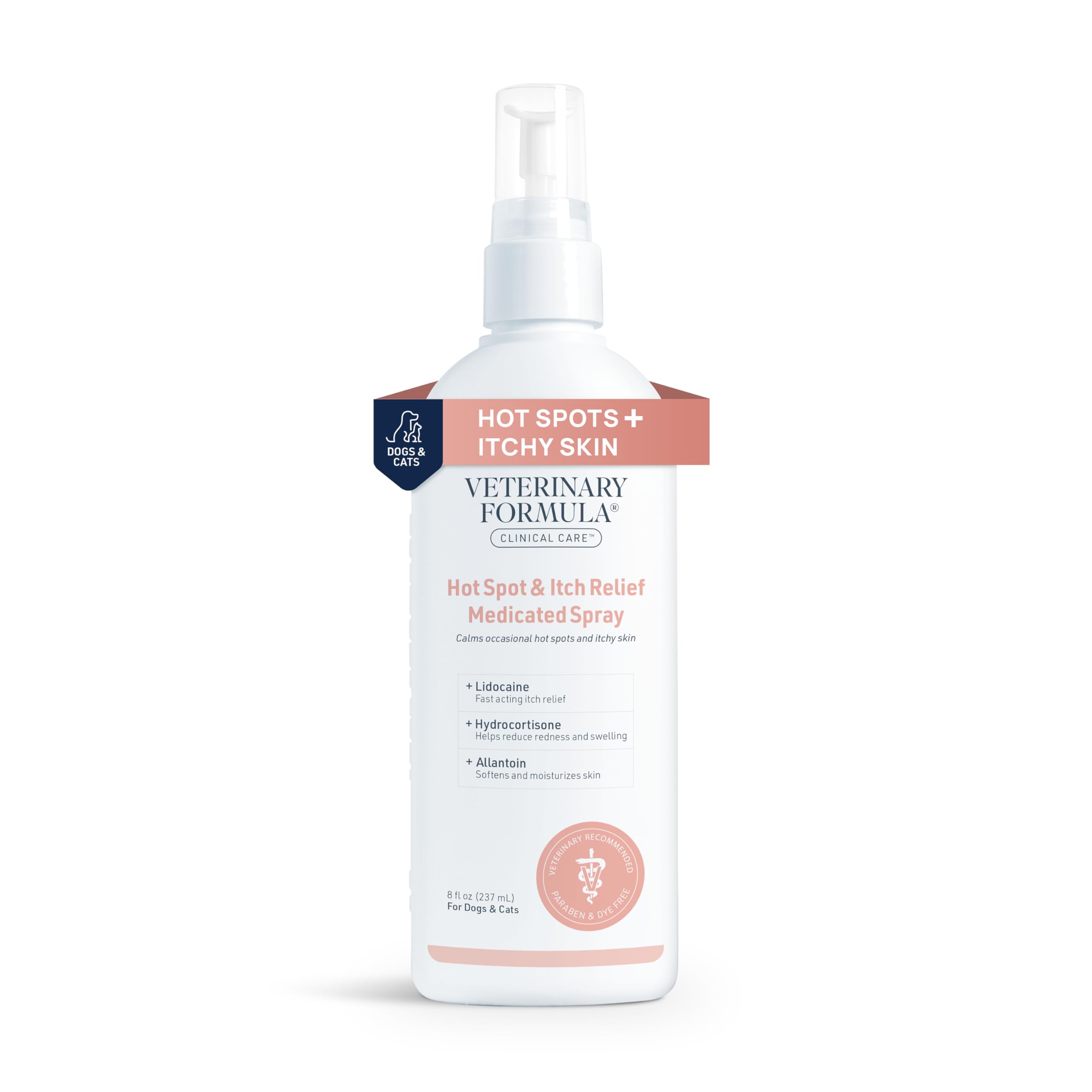
Vet Formula Medicated Spray

Vet Formula Medicated Spray

Moderate hot spots

Our Score 8.8/10
Check Price

Worth Noting

  • Some dogs experience stinging or increased itching after application, especially those sensitive to lidocaine.
  • Lacks antifungal coverage, so yeast-related hot spots may not respond.
Format
Spray
Volume
8 fl oz
Sting or Alcohol
May sting some dogs
Active Ingredient
Lidocaine, Hydrocortisone
Read the full review

This spray clears hot spots in three to seven days, with fur regrowing soon after the infection resolves. The combination of lidocaine and hydrocortisone reduces itch and inflammation effectively, and the citrus scent is inoffensive. At a fraction of the cost of vet treatments, it delivers on its primary promise.

The lidocaine component can cause stinging or increased itching in some dogs, so a patch test is wise before full application. This spray is best suited for dogs with bacterial or inflammatory hot spots that respond well to hydrocortisone. It does not treat yeast-driven hot spots, and owners wanting a completely natural product should look elsewhere. The spray nozzle delivers a consistent mist without clogging, a practical advantage over some competitors.

Apply a small test dose and monitor for increased irritation before full use.

Bottom line: For bacterial hot spots that respond to hydrocortisone, this spray offers fast healing at a price that's hard to beat.

8

Vetericyn Plus Spray

Vetericyn Plus Spray

Sensitive skin

Our Score 8.8/10
Check Price

Worth Noting

  • Spray nozzle can clog or deliver an uneven stream in some bottles.
  • Premium-priced compared to medicated alternatives with similar relief.
Format
Spray
Volume
8 fl oz
Sting or Alcohol
No sting
Active Ingredient
Hypochlorous acid
Read the full review

Vetericyn Plus uses hypochlorous acid to clean hot spots without stinging or steroids, making it a go-to for owners whose dogs have sensitive skin or adverse reactions to medicated sprays. It works more gradually than the top pick — relief often appears within 48 hours rather than 24. The spray nozzle can be inconsistent, and at a premium price, it is not the most economical choice for occasional use. This is best for dogs needing a non-toxic, steroid-free option or for general wound care where stronger medication is not warranted.

If the nozzle clogs, remove the spray head and rinse under warm water to restore flow.

Bottom line: If your dog has steroid sensitivities or you want a non-toxic spray for minor hot spots, this is the safest option available — just expect a slower pace and occasional nozzle quirks.

9

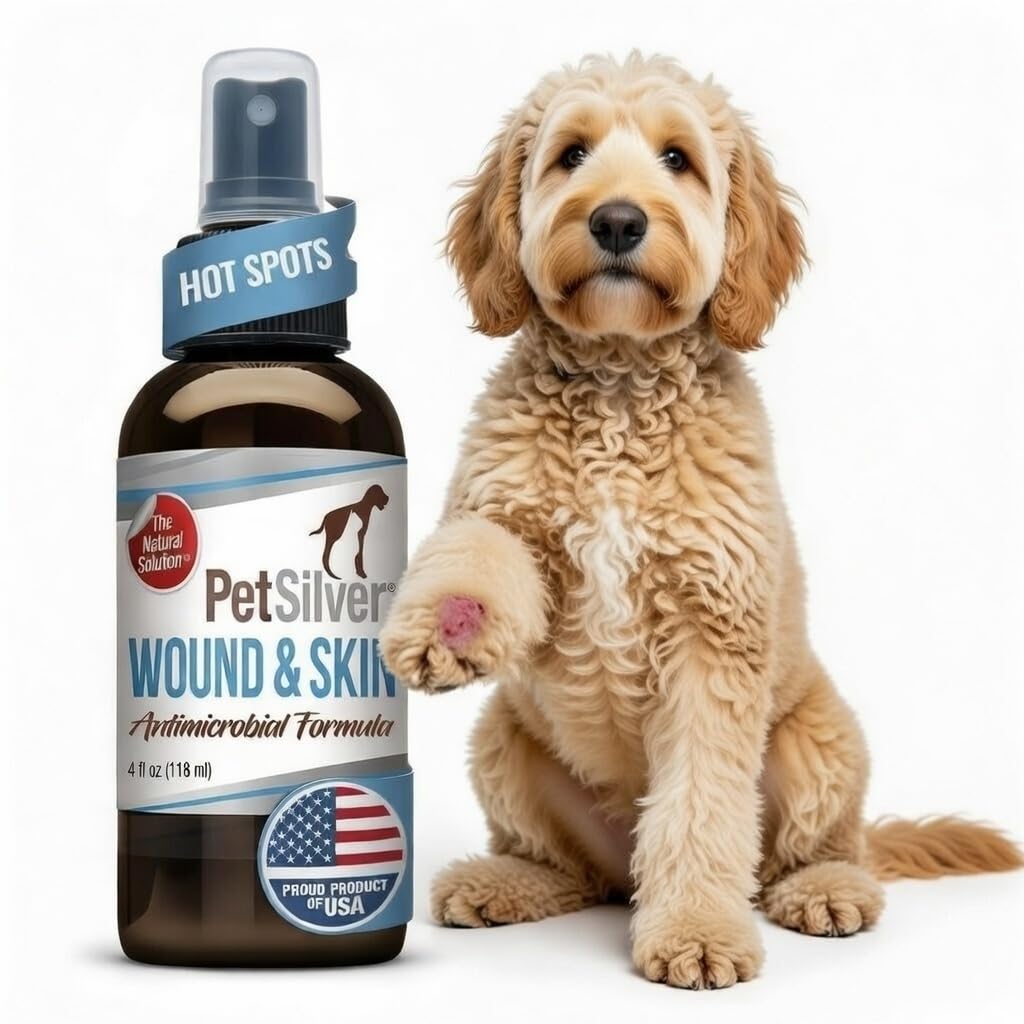
PetSilver Chelated Spray

PetSilver Chelated Spray

Multi-purpose antiseptic

Our Score 8.8/10
Check Price

Worth Noting

  • Premium price for a 4-oz bottle; cost per use adds up
Format
Spray
Volume
4 fl oz
Sting or Alcohol
No sting
Active Ingredient
Chelated Silver
Read the full review

PetSilver's chelated silver spray provides a non-stinging, odorless barrier that helps minor hot spots and cuts heal without irritation. The 4-oz bottle carries a premium price, and the silver concentration is better suited for maintenance than for serious infections. This spray fits owners who want a non-toxic antiseptic for everyday first-aid and mild hot spots, especially if they share their home with cats or need a human-safe option.

Bottom line: A gentle, multi-species silver spray for minor wounds, but the high cost and limited potency mean it's best as a first-aid supplement, not a primary treatment.

10

Natural Dog Co Skin Soother Balm

Natural Dog Co Skin Soother Balm

Small localized spots

Our Score 8.8/10
Check Price

Worth Noting

  • Small stick size leads to high per-ounce cost for regular use on multiple spots.
Format
Balm stick
Volume
0.15 oz
Sting or Alcohol
No sting
Active Ingredient
Chamomile, Calendula
Read the full review

This balm uses 100% natural ingredients like chamomile and cocoa butter to calm irritation on small, localized hot spots without stinging or requiring pre-cleaning. The 0.15 oz stick is convenient for on-the-go use and safe if ingested, but for larger areas or frequent recurrence, the cost per ounce climbs quickly — a better match for occasional, targeted treatment than ongoing maintenance.

Because the stick is small, apply a thin layer to maximize uses per stick.

Bottom line: Best for the occasional small hot spot or travel kit where portability and natural ingredients matter more than economy.

11

Vet's Best Hot Spot Shampoo

Vet's Best Hot Spot Shampoo

Mild itchy skin

Our Score 8.8/10
Check Price

Worth Noting

  • Tea tree oil may aggravate itching in dogs with sensitivity to it.
Format
Shampoo
Volume
16 fl oz
Sting or Alcohol
May irritate some dogs
Active Ingredient
Tea Tree Oil, Aloe Vera
Read the full review

This aloe and chamomile shampoo calms dry, itchy skin with regular use, leaving the coat soft and pleasant-smelling. As a wash-off product, it works best for maintenance rather than healing active hot spots — pair it with a topical spray or cream for real relief. Dogs with tea tree oil sensitivity may see increased scratching.

Bottom line: Reach for this shampoo as a gentle, affordable cleaner for mild itchiness, but keep a medicated topical on hand for active hot spots.

12

Vetericyn Plus Gel

Vetericyn Plus Gel

Small targeted spots

Our Score 8.8/10
Check Price

Worth Noting

  • Spray mechanism can clog, making application inconsistent.
Format
Gel (spray-on)
Volume
3 fl oz
Sting or Alcohol
No sting
Active Ingredient
Hypochlorous acid
Read the full review

The gel formula soothes hot spots without stinging and is safe if licked, making it a solid option for sensitive dogs. However, the spray nozzle is prone to clogging, which can interrupt use — transferring the gel to a separate bottle or your finger may be necessary.

Bottom line: Works well for owners willing to apply the gel directly or transfer it to a different container rather than rely on the spray.

13

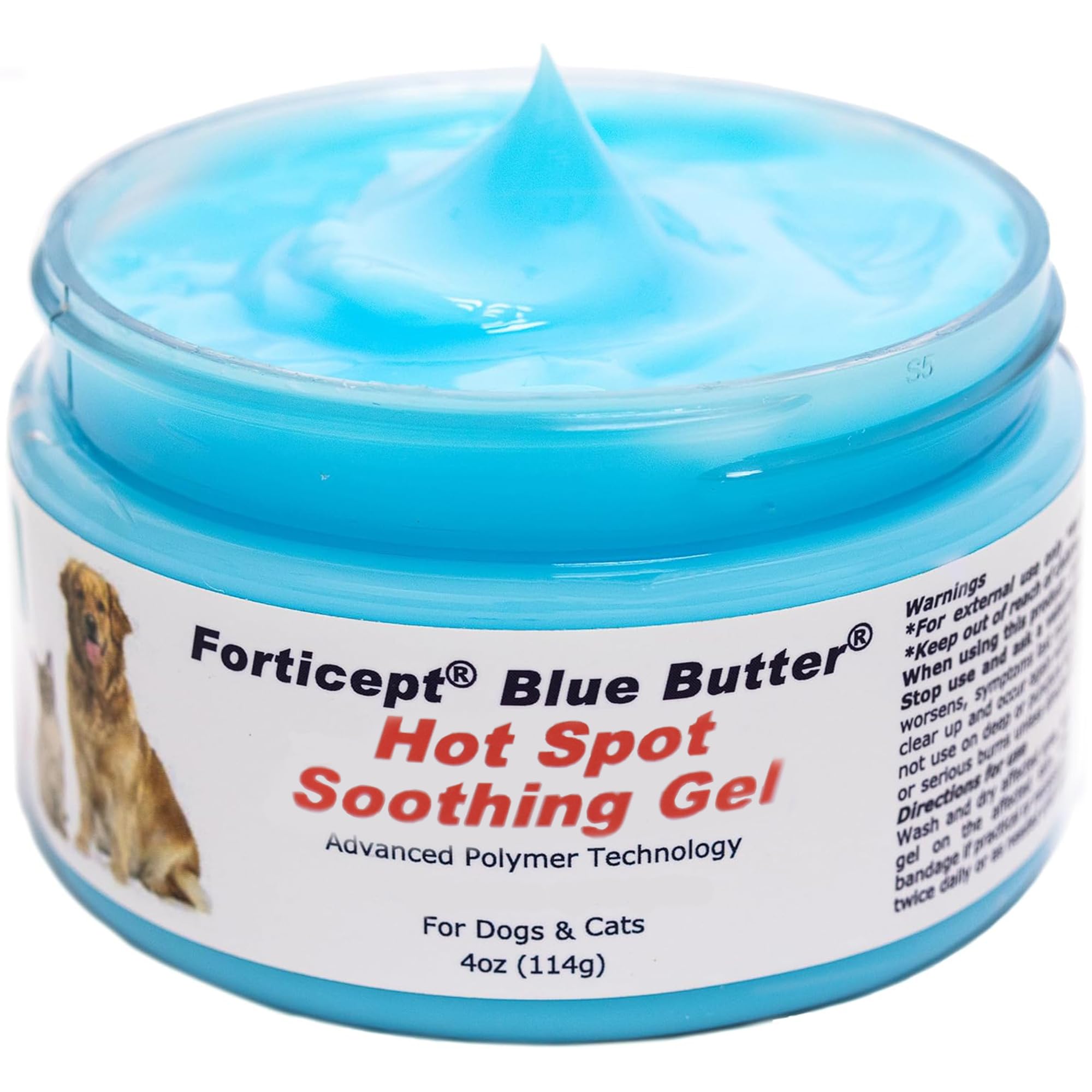
Forticept Blue Butter

Forticept Blue Butter

Fast healing

Our Score 8.6/10
Check Price

Worth Noting

  • Blue gel can stain light-colored fur
Format
Gel (blue)
Volume
4 oz
Sting or Alcohol
No sting
Active Ingredient
Thyme oil (thymol)
Read the full review

Forticept Blue Butter’s antimicrobial gel targets hot spots with fast results, often showing improvement within a day. It also promotes fur regrowth after healing. However, the strong thyme scent may linger, and the blue gel can stain light-colored coats, making it better suited for dark-furred dogs where discoloration goes unnoticed.

Bottom line: Best for dark-coated dogs when rapid healing and regrowth matter more than scent and stain avoidance.

14

Pet MD Hydrocortisone Spray

Pet MD Hydrocortisone Spray

Spec-driven choice

Our Score 8.6/10
Check Price

Worth Noting

  • Real-world effectiveness cannot be confirmed due to lack of user feedback.
Format
Spray
Volume
4 fl oz
Sting or Alcohol
Non-stinging (claimed)
Active Ingredient
1% Hydrocortisone
Read the full review

This spray offers a non-stinging, fragrance-free formula with 1% hydrocortisone at a competitive price. However, the lack of available user feedback makes it impossible to verify its real-world effectiveness for hot spots.

Bottom line: Suitable for owners willing to rely on product specs alone, but those wanting proven performance should look to the top pick.

How to Choose

Active Ingredient Type

Hydrocortisone reduces inflammation and itching fast, but it may sting on open skin and is less effective against yeast. Chlorhexidine kills bacteria, and ketoconazole targets yeast — together they cover the most common infections but can have a strong scent. Silver and honey provide antimicrobial action without drugs, but they work slower and may not clear severe infections. Choose based on whether the hot spot looks red and inflamed (hydrocortisone), weepy with a yeasty smell (antifungal), or if your dog has known allergies (natural options).

Format

Sprays are convenient for large or hard-to-reach areas, but many products suffer from clogged nozzles after a few uses. Creams and ointments stay on the spot longer and don't require the dog to stay still during application, but they can be messy and mat fur. Balm sticks offer mess-free precision for small spots but run out quickly due to tiny sizes. Consider how much area you need to treat and whether your dog tolerates the application method.

Volume

Treating a single hot spot may need only one or two ounces, but recurring or multiple spots require larger bottles. A 4-ounce spray can run out in a week of daily use, while an 8-ounce bottle offers better value per treatment. Balm sticks are often 0.15 ounces — fine for a small patch, but deceptive if you need to cover a palm-sized area. Check the volume against the size of the affected area to avoid running out mid-treatment.

Sting or Alcohol

Alcohol-based sprays sting on raw skin, causing dogs to flinch and resist treatment. Many medicated sprays are now alcohol-free to avoid this, but lidocaine or hydrocortisone can still produce a momentary sting. Natural sprays are generally non-stinging. If your dog has a low pain tolerance, choose a product explicitly marked as painless or test a small area first. A bad application experience can make it harder to treat the spot consistently.

Natural vs Medicated

Natural treatments (silver, honey, aloe, chamomile) are safe if licked and rarely cause side effects, but they lack the potency to stop active infections quickly. Medicated options (hydrocortisone, chlorhexidine, ketoconazole) work faster and are proven for bacterial and fungal issues, but may require caution around licking (though many are safe in small amounts). The trade-off is speed versus gentleness. For mild irritation, try natural first; for weeping or spreading hot spots, go medicated.

Frequently Asked Questions