Harness Lead Escape Resistant
Top Pick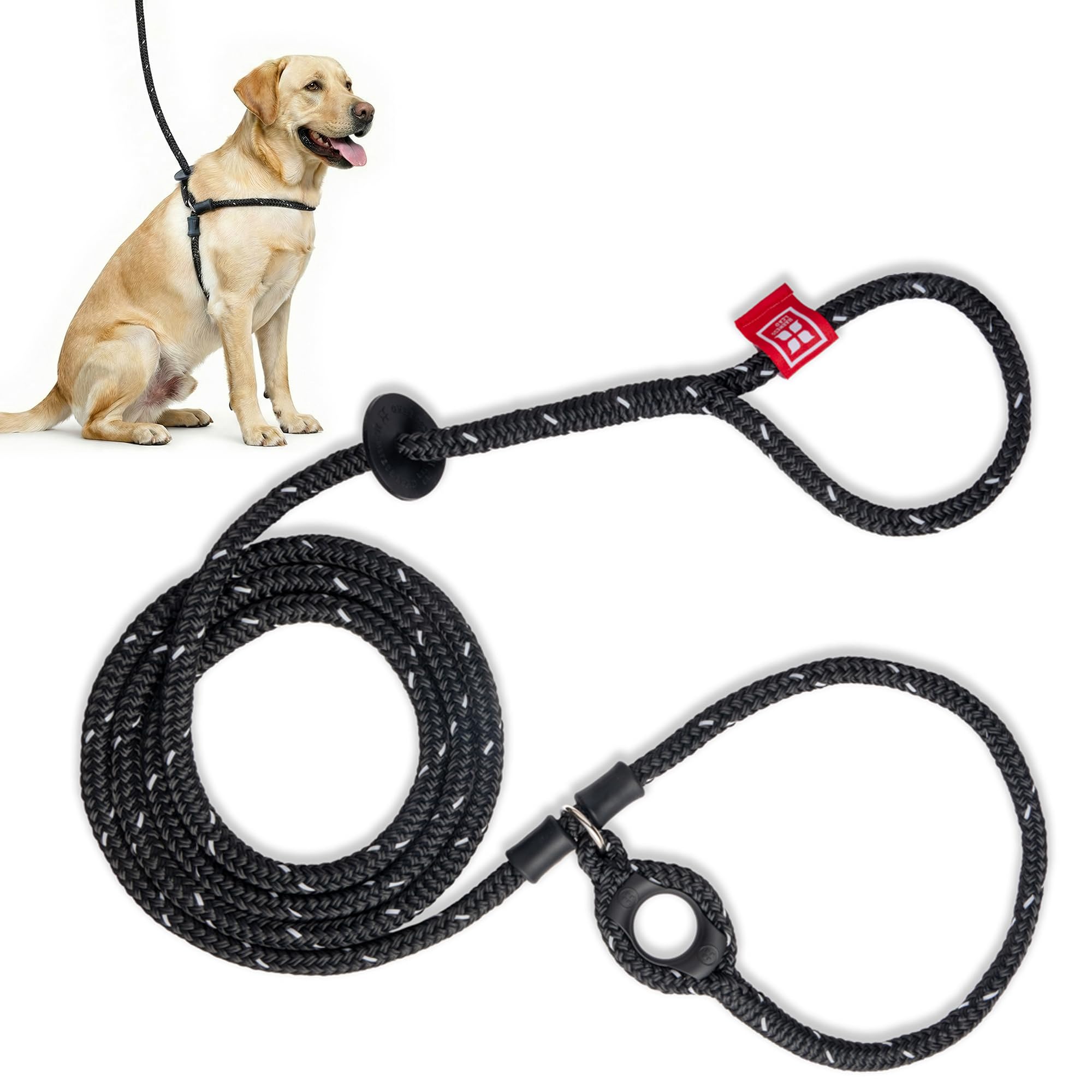
What We Like
- Prevents backing out with a self-tightening design that adjusts as the dog moves.
- Reduces pulling by applying chest pressure instead of throat pressure, calming walks.
- Durable nylon rope construction with a 3,700 lb tensile strength for long-term use.
Worth Noting
- Initial setup requires practice to get the fit right; the pull-on method can be fiddly at first.
- Rope material can be damaged by dogs that chew on their harness.
- Lift Handle
- No
- Closure Type
- Pull-on, no buckles
- Adjustment Points
- Sliding stops
- Material & Padding
- Nylon rope
Read the full review
The rope-style design physically prevents a dog from backing out of this harness. As the dog pulls forward, the loops tighten around the chest and neck, making it impossible to slip backward through the collar area. This eliminates the need for multiple straps, buckles, or adjustment points that can fail on conventional harnesses. Owners of Houdini dogs find the mechanism reliable where other harnesses have let them down.
The same tightening action applies gentle pressure across the dog's chest rather than the throat, which discourages pulling without choking. Walkers report a noticeable difference in leash tension, especially with strong dogs that typically lunge. The 3,700 lb tensile rating and double-braided nylon construction handle heavy use without fraying or loosening over time. For daily walks with large breeds, this harness holds up well.
This harness suits owners of large strong dogs (40-170 lbs) that have a history of escaping from traditional harnesses. The pull-on design takes a few tries to learn — the sliding stops must be positioned correctly before the dog steps in. It is not a fit for dogs that chew on their gear, as the rope can be damaged. Small breeds under 40 lbs will not get a secure fit, so this is exclusively a solution for larger escape artists.
Practice the pull-on method a few times indoors before the first walk — the fit is secure once the technique is familiar.
Bottom line: For owners of large, determined escape artists, the escape-proof mechanics deliver exactly what they promise — just be prepared for the upfront learning curve.