Food & Treats

8 Best Dry Puppy Food of 2026: Gentle on Your Puppy's Stomach

Which dry puppy foods support healthy growth without causing digestive upset? This guide helps owners of small, large, and sensitive-stomach puppies find the right balance.

Finding a dry puppy food that your dog actually thrives on can feel like a guessing game. Many formulas promise balanced nutrition but lead to digestive upset or refusal at the bowl. The real challenge is matching the food to your puppy's specific size, jaw shape, and stomach sensitivity.

This guide focuses on formulas that have been proven to work for thousands of puppies. It highlights the trade-off between highly specialized kibble shaped for tiny jaws and broader formulas that offer better value. The best choice depends on whether your puppy needs extra digestive support or simply a reliable, affordable staple.

For large breeds, controlled growth and joint support matter more than kibble shape. For small breeds, tiny kibble sizes and gentle ingredients can make the difference between a happy eater and a messy struggle. Understanding these trade-offs helps you choose a food your puppy will actually eat and digest well.

1

Hill's Small & Mini Puppy

Top Pick
Hill's Small & Mini Puppy

Small & mini breeds

Our Score 9.6/10
Check Price

Worth Noting

Breed Size
Small & Mini
Kibble Type
Small granule
Protein Source
Chicken
Read the full review

Hill's Small & Mini Puppy uses chicken and brown rice with no by-products, and the small granule kibble is sized for tiny jaws. DHA from fish oil supports brain and eye development while antioxidants help build immune health. Digestive tolerance is consistently good across small breed puppies, making this one of the more reliable options in the category.

This formula is built for owners of small and mini breed puppies who want vet-recommended nutrition without paying premium prices. If your puppy is a large breed, the calcium levels are not calibrated for large bone growth — Hill's Large Breed formula is the necessary alternative. For small breeds, this is a direct, no-fuss choice that balances quality and cost.

Bottom line: Small breed owners seeking vet-backed nutrition with digestive reliability get a strong match here — at a lower cost than many premium small-breed competitors.

2

Royal Canin Small Puppy

Royal Canin Small Puppy

Small sensitive stomachs

Our Score 9.6/10
Check Price

Worth Noting

  • Per-pound cost is significantly higher than standard puppy foods, making long-term feeding expensive.
Breed Size
Small
Kibble Type
Pellet
Protein Source
Chicken
Read the full review

Royal Canin's Small Puppy formula uses a tiny kibble size that small jaws can handle and adds prebiotics to ease digestion, which matters for puppies with sensitive stomachs. Owners who have tried other small breed formulas often find this one causes fewer digestive upsets, and the high palatability helps with picky eaters. The tradeoff is a premium per-pound cost that sits well above budget-friendly options — a factor to consider for households with one small puppy over several months.

Bottom line: Best suited for small breed puppies with sensitive stomachs where the higher cost is offset by digestive comfort and acceptance.

3

Hill's Small Bites Puppy

Hill's Small Bites Puppy

All-breed value

Our Score 9.6/10
Check Price

Worth Noting

  • Some puppies may refuse to eat this formula, making it a gamble for picky eaters.
Breed Size
All breeds
Kibble Type
Granule
Protein Source
Chicken
Read the full review

Hill's Science Diet Puppy Small Bites delivers solid nutrition at the lowest price per pound among Hill's puppy formulas. While it lacks the specialized kibble shape and prebiotic blend of the premium-priced small breed option, it offers comparable digestive tolerance for most puppies at a fraction of the cost. Best for budget-conscious owners of any breed who have a puppy that accepts chicken-based food and does not require a tiny kibble shape. Some puppies may refuse to eat this formula, so palatability can be an issue for picky eaters.

If your puppy rejects the kibble, try moistening it with warm water or mixing with a small amount of wet food to boost appeal.

Bottom line: This is a cost-effective entry point into Hill's puppy nutrition for owners who prioritize value and have a puppy with a non-picky appetite.

4

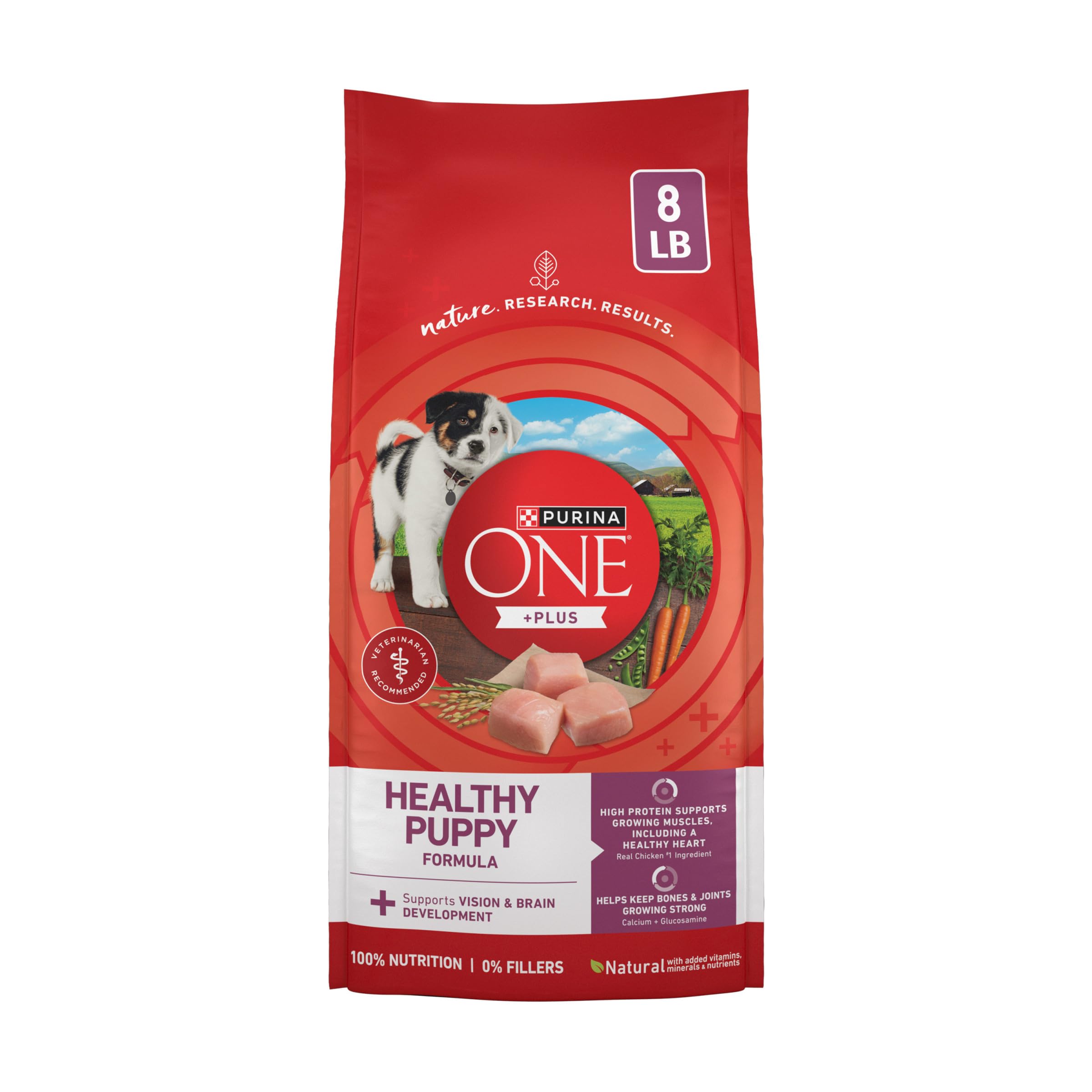
Purina ONE Plus Puppy

Purina ONE Plus Puppy

Budget high-protein

Our Score 9.4/10
Check Price

Worth Noting

  • Digestive upset can occur in some puppies
Breed Size
All
Kibble Type
Blended crunchy-tender
Protein Source
Chicken (real first)
Read the full review

This formula delivers an unbeatable per-pound cost for high protein content and real chicken as the first ingredient, making it a strong value for owners on a budget. The taste is consistently well-received, and ingredients skip artificial flavors. However, digestive upset can occur in some puppies, so this works best for robust-stomached pups in multi-pet households where cost savings matter most.

Transition gradually over 7-10 days to reduce the chance of digestive upset.

Bottom line: A cost-effective pick for puppies with iron stomachs, but skip it if loose stools are a concern.

5

Purina Pro Plan Large

Purina Pro Plan Large

Large breed taste

Our Score 9.4/10
Check Price

Worth Noting

  • Digestive intolerance (diarrhea, vomiting) can occur
Breed Size
Large
Kibble Type
Standard dry
Protein Source
Chicken
Read the full review

Purina Pro Plan Large Breed Dry Puppy Food combines high palatability with real chicken, glucosamine for joint support, and DHA for cognitive growth. The large bag delivers competitive per-pound value, making it a practical mid-range option.

This formula is best suited for large breed puppies with robust digestive systems whose owners prioritize taste and coat health. The risk of digestive upset is a notable tradeoff – it is not recommended for sensitive stomachs.

Transition gradually over 7-10 days and monitor stool consistency to reduce the chance of digestive upset.

Bottom line: Ideal for large breed owners who want a tasty formula with joint support and are prepared to manage potential digestive sensitivity.

6

IAMS Large Breed Puppy

IAMS Large Breed Puppy

Budget large breed

Our Score 9.4/10
Check Price

Worth Noting

  • In puppies with sensitive stomachs, digestive upset may develop
Breed Size
Large
Kibble Type
Dry kibble
Protein Source
Chicken
Read the full review

This bag delivers solid nutrition for large breed puppies at a rock-bottom per-pound cost. The chicken-based formula supports healthy growth and coat condition. However, digestive upset (diarrhea or vomiting) occurs in some cases, making this a riskier choice than the top pick — particularly for sensitive puppies. It suits owners who prioritize budget and have a puppy with proven robust digestion.

Bottom line: Best for budget-conscious owners with large breed puppies that have proven to tolerate chicken-based formulas without digestive issues.

7

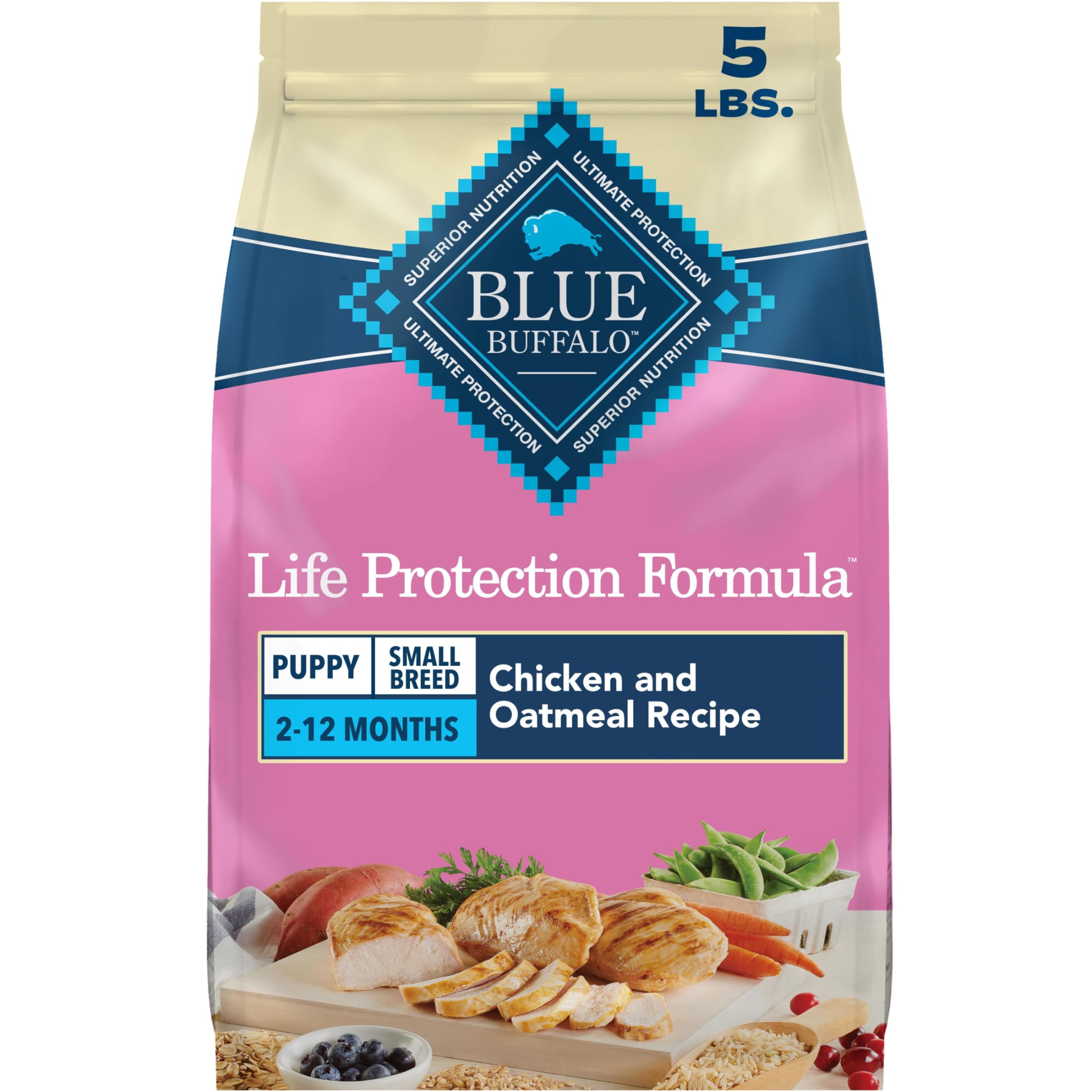
Blue Buffalo Small Breed

Blue Buffalo Small Breed

Natural small breed

Our Score 9.4/10
Check Price

Worth Noting

  • Some puppies may refuse to eat the kibble.
Breed Size
Small
Kibble Type
Granule
Protein Source
Chicken (real)
Read the full review

This formula features real chicken and whole grains without corn, wheat, or soy, and the small kibble size suits tiny jaws. Positive coat and energy effects are reported. However, some puppies may refuse the food, and others can experience loose stools, making it a gamble for picky or sensitive stomachs.

Bottom line: Suitable for small breed puppies with non-sensitive digestion that accept Blue Buffalo readily — a decent mid-range option if your pup tolerates it.

8

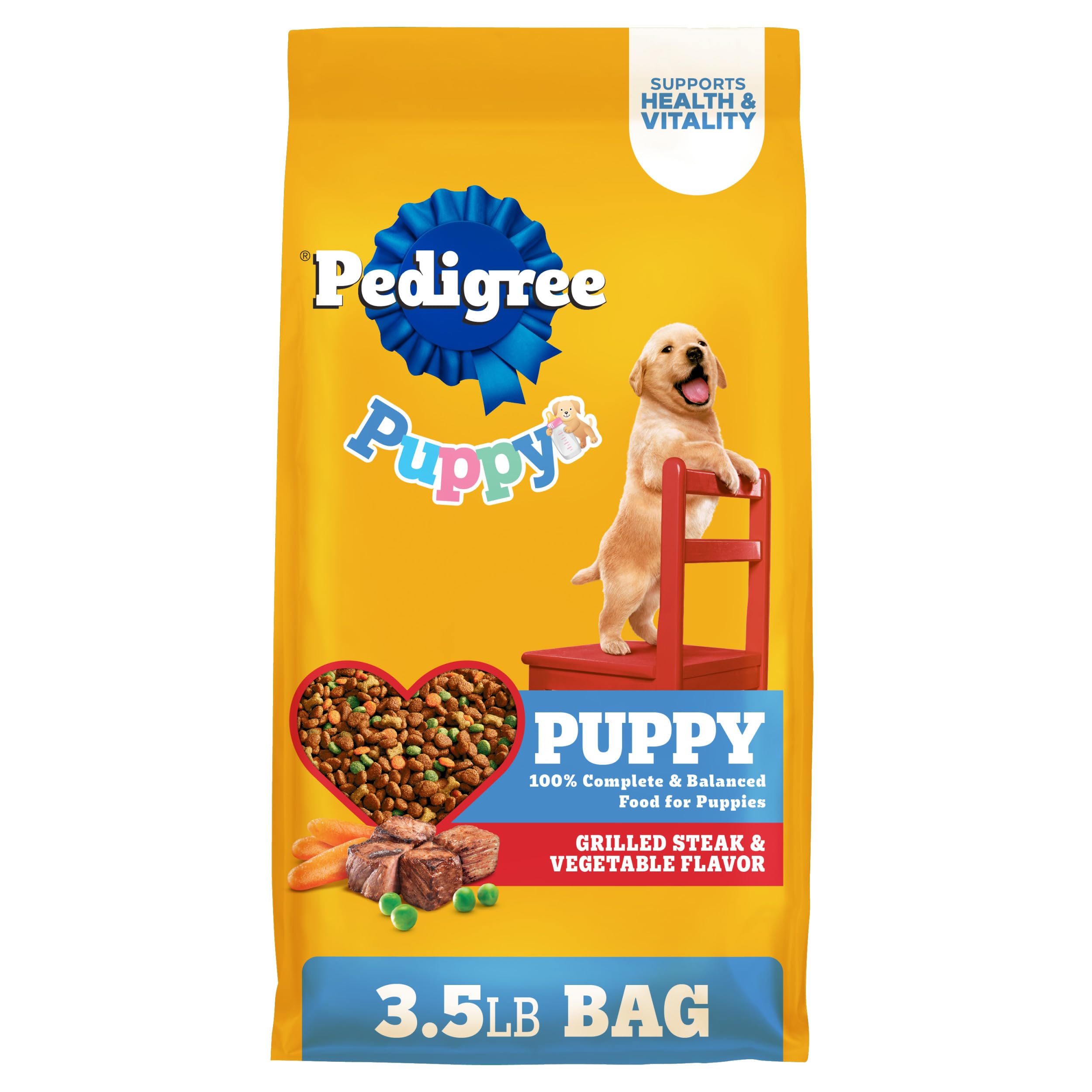
Pedigree Puppy Steak

Pedigree Puppy Steak

Emergency use

Our Score 9.4/10
Check Price

Worth Noting

  • Can cause digestive upset in some puppies
Breed Size
All
Kibble Type
Chunk
Protein Source
Grilled steak & vegetables
Read the full review

Pedigree's puppy formula offers an extremely low-cost option with kibble small enough for young puppies. Ingredient quality is lower than competitors and some puppies may experience digestive upset, making it suitable for temporary feeding or emergency backup rather than primary long-term nutrition.

Bottom line: Best for owners needing a budget-friendly short-term solution or emergency food, but not a replacement for quality long-term puppy nutrition.

How to Choose

Breed Size Compatibility

Small breed puppies have narrow jaws and need tiny kibble to chew properly. Large breeds grow rapidly and require controlled calcium and phosphorus levels to prevent skeletal issues. All-breed formulas with small kibble can work for multiple sizes but may lack the precise nutrient balance larger dogs need.

Feeding a large-breed puppy a small-breed formula can lead to too-rapid growth, increasing the risk of hip dysplasia. Conversely, small puppies can choke on large kibble. Always check the bag's breed size recommendation.

Protein Source and DHA

Chicken is the most common protein in puppy foods, but many puppies develop sensitivities after repeated exposure. Lamb or fish-based formulas offer a novel protein that can reduce allergic reactions. DHA (an omega-3 fatty acid) supports brain and vision development and is a standard inclusion in quality puppy foods.

A food with real named protein (like 'chicken' or 'lamb') as the first ingredient indicates higher meat content than those with by-products or generic 'poultry'. However, a high protein percentage doesn't always mean better digestibility - some puppies do fine with moderate protein.

Digestive Tolerance

Digestive upset is the most common complaint among puppy food buyers. Prebiotics (like beet pulp) and probiotics help maintain gut bacteria, while limited ingredient lists reduce the chance of reactions. Even high-quality foods can cause diarrhea if introduced too quickly.

A 7-to-10 day transition period mixing old and new food is essential. If loose stools persist after that, the protein source or fiber level may not suit your puppy. Switching to a formula with added digestive aids or a novel protein often resolves the issue.

Kibble Size and Shape

Kibble designed for small breeds is typically 8-10mm in diameter, while large breed kibble can be 12-15mm. Special shapes (like the 'pellet' form in Royal Canin) are engineered to slow eating or encourage chewing. Flat, irregular shapes may be harder for brachycephalic breeds like Bulldogs to pick up.

The wrong kibble size can lead to gulping (risk of choking) or food refusal. Measure the kibble against your puppy's jaw width: if it looks too big or too small, choose a different size range.

Veterinarian Recommendation and Ingredient Transparency

Brands like Hill's Science Diet and Royal Canin are frequently recommended by vets because they invest in clinical feeding trials and use consistent ingredient sourcing. Their formulas meet AAFCO nutrient profiles for growth. However, 'vet-recommended' is not a guarantee of individual tolerance - it's a baseline of safety and nutrition.

Ingredient transparency matters: avoid vague terms like 'meat meal' with no species named. Look for the AAFCO statement on the bag that confirms the food is complete and balanced for puppies. Higher-priced specialty foods often lack this testing and rely on marketing claims.

Frequently Asked Questions