Grooming

13 Best Dog Brush for Labs in 2026: Remove Undercoat Without Discomfort

Labrador owners: find the right undercoat rake that removes heavy shedding without irritating your dog's sensitive skin.

Labradors have a short, dense double coat that sheds heavily twice a year. Many deshedding brushes on the market are slicker brushes that only skim the surface, leaving the undercoat untouched. The tool actually built for this job is an undercoat rake.

Undercoat rakes come in two main designs: fixed-tooth rakes that grab a lot of hair per stroke but require a light touch, and rotating-tooth rakes that are gentler but need more passes. Your choice comes down to how sensitive your Lab is during grooming.

A brush that causes flinching will end up in the drawer. The best rake for you is the one your dog tolerates while still pulling out the loose undercoat that ends up on your furniture.

1

MalsiPree 2-in-1 Deshedding Rake

Top Pick
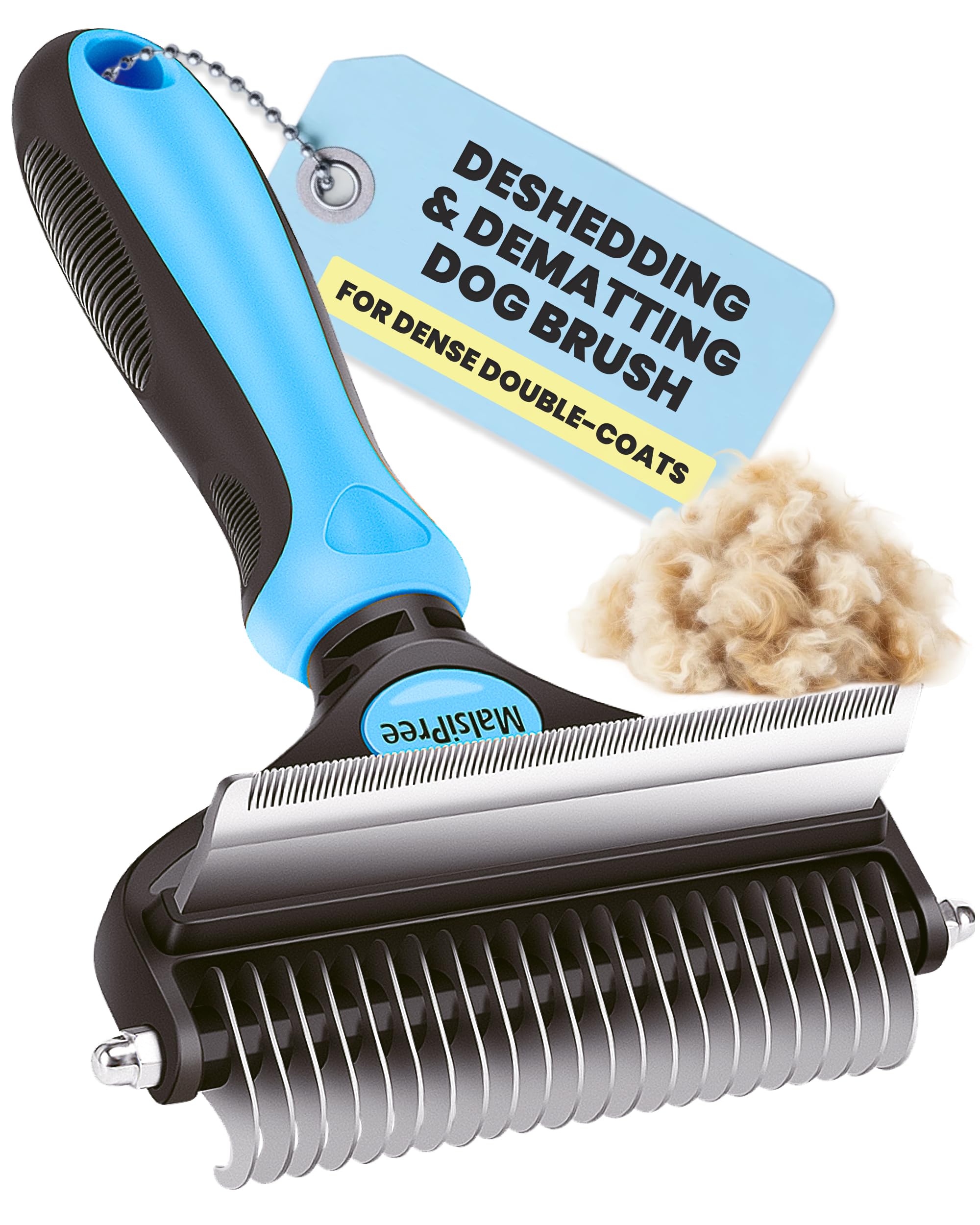
MalsiPree 2-in-1 Deshedding Rake

Gentle undercoat rake

Our Score 9.4/10
Check Price

Worth Noting

  • May remove slightly less undercoat on extremely thick winter coats of some breeds, requiring extra passes
Handle
Cushioned non-slip
Tool Type
Undercoat rake
Pin Safety
Smooth edges prevent irritation
Tooth Design
Dual-sided, fixed teeth
Read the full review

This two-in-one rake pulls out loose undercoat efficiently while its smooth-edged teeth glide through the coat without scraping skin. The cushioned handle makes extended grooming sessions comfortable, and the build feels solid enough for regular use on a heavy-shedding Labrador.

The design combines a deshedding rake and undercoat rake in one tool, reducing the need to switch between brushes. Owners report that dogs tolerate it well, even those that usually resist brushing. The blue finish is purely cosmetic, but the metal teeth remain rust-free with normal care.

This rake is best for Lab owners who want a gentle yet effective undercoat remover — it handles the typical short, dense coat of a Labrador without issue. For breeds with exceptionally thick winter coats (like Huskies or Malamutes), the rake may require more passes than a more aggressive tool, but for Labs it works without pulling or discomfort. Priced mid-range, it competes directly with the popular budget rake from Maxpower, offering slightly more consistent comfort during use.

Bottom line: For Lab owners seeking a gentle rake that actually gets used, this is the tool to buy — it balances effectiveness with dog comfort.

2

Paw Brothers Extra Long Slicker

Paw Brothers Extra Long Slicker

Long-haired dogs

Our Score 9.4/10
Check Price

Worth Noting

  • Pins are too long for short-haired Labs; better suited for dogs with thick, long coats.
  • Pins may bend when used on very thick mats or with heavy pressure.
Handle
Ergonomic professional grade
Tool Type
Slicker brush, long pins
Pin Safety
Flexible stainless pins
Tooth Design
Extra-long stainless pins
Read the full review

The Paw Brothers Extra Long Slicker is a professional-grade brush built for double-coated dogs with dense, long fur. Its stainless steel pins penetrate deep to lift undercoat and prevent mats in breeds like doodles and Goldens. For Lab owners in multi-dog households with both short and long-haired dogs, it’s a capable secondary brush. But for a Labrador specifically, the extra-long pins offer no advantage over a shorter slicker or a dedicated undercoat rake, and the pins can bend if used aggressively on thick mats. This brush is best reserved for the long-haired member of the pack, not the heavy-shedding Lab.

Use gentle, light strokes on mats to avoid bending pins; a metal comb or rake is better for serious de-matting.

Bottom line: Buy this only if you own a long-haired dog alongside your Lab and need a single brush for both – otherwise a shorter slicker or undercoat rake is a more practical choice.

3

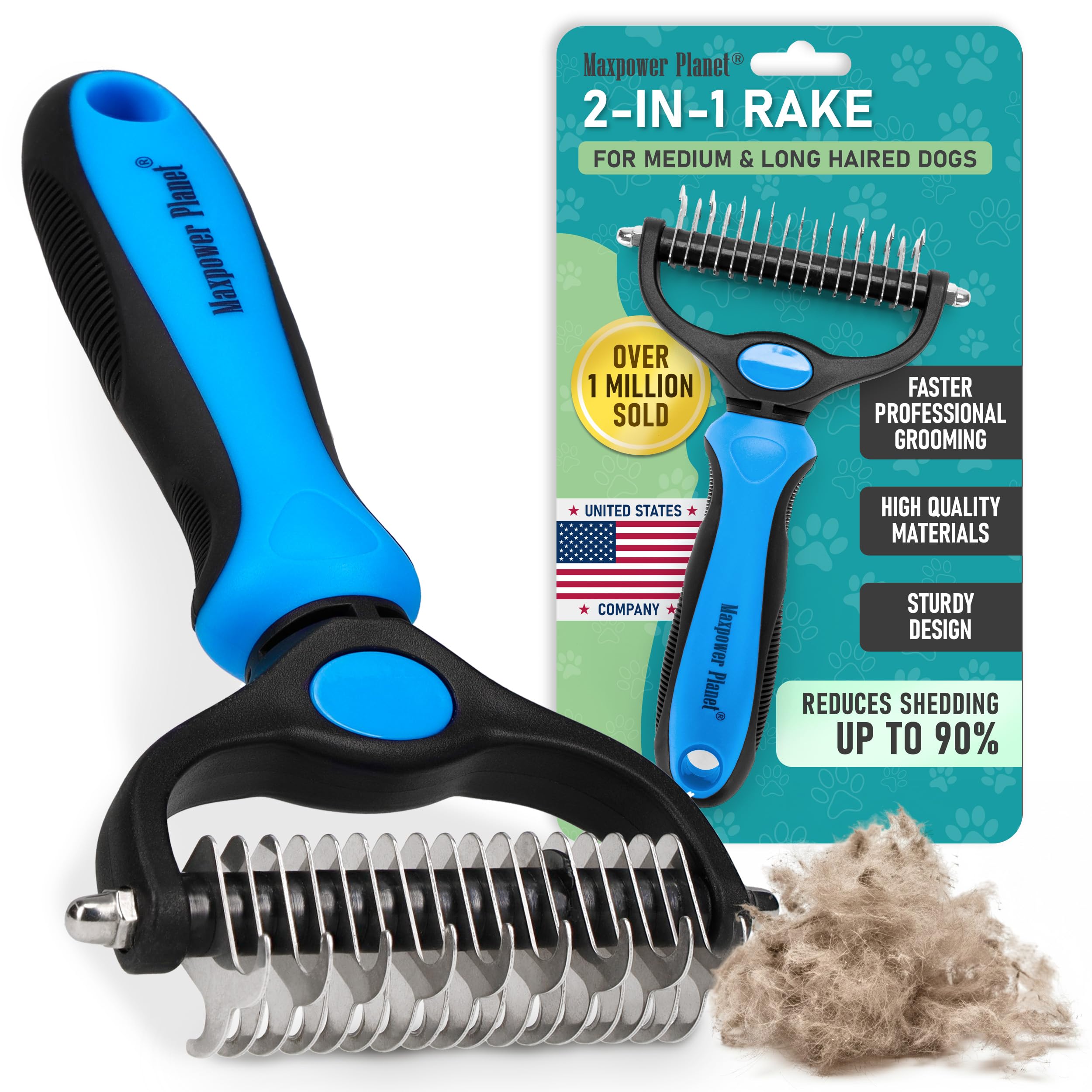
Maxpower Planet Grooming Rake

Maxpower Planet Grooming Rake

Budget deshedding rake

Our Score 9.2/10
Check Price

Worth Noting

  • No self-cleaning mechanism
  • In dogs with sensitive skin, the rake's fixed teeth can cause discomfort unless used with a very light hand.
Handle
Lightweight rubber base
Tool Type
Undercoat rake, dual-sided
Pin Safety
Sharpened but rounded edges
Tooth Design
Dual-sided, fixed teeth
Read the full review

The Maxpower Planet Grooming Rake shares the same dual-sided design as the top pick — 9 dematting teeth on one side, 17 deshedding teeth on the other — at a lower price point. Its effectiveness at removing undercoat is confirmed by extensive owner feedback, making it a go-to for households managing heavy-shedding breeds like Labs.

This rake suits Lab owners comfortable with a firm grooming tool and willing to adjust technique to avoid discomfort. The sharp but rounded teeth require a light hand — pressing too hard can cause skin irritation for sensitive dogs. For owners who prioritize a gentler experience, the top pick's rotating teeth may be a better fit. However, for budget-conscious households with multiple double-coated dogs, this rake delivers consistent shedding control at a fraction of the cost.

Use a light, sweeping motion rather than pressing down; let the teeth do the work to avoid skin irritation.

Bottom line: Maxpower Planet is a cost-effective rake that delivers solid shedding control for Labs if you use a gentle technique – best for owners comfortable with a firm tool who are willing to adjust their brushing style.

4

FURminator Grooming Rake

FURminator Grooming Rake

Sensitive double coats

Our Score 9.2/10
Check Price

Worth Noting

  • Rotating teeth may require more passes to achieve the same undercoat removal as fixed-tooth rakes
  • Not a blade-style deshedder; some owners prefer the faster one-pass hair removal of a blade
Handle
Ergonomic non-slip
Tool Type
Undercoat rake, rotating teeth
Pin Safety
Rotating reduces tugging
Tooth Design
Rotating metal teeth
Read the full review

The rotating teeth on this FURminator rake reduce pulling and tugging, a clear advantage for dogs that are sensitive to traditional fixed-tooth rakes. Compared to budget rakes that rely on fixed teeth, the rotating design spares the dog's skin while still lifting loose undercoat. However, the rotating teeth may remove slightly less undercoat per stroke, requiring a few extra passes over the coat.

This rake is best for Lab owners whose dogs are reluctant to be groomed due to discomfort from other rakes. The ergonomic non-slip handle and FURminator brand quality at a mid-range price add confidence, but those who want maximum undercoat removal per stroke may prefer a fixed-tooth design.

Bottom line: A gentle undercoat rake that prioritizes comfort over speed – ideal for Labs that dislike being brushed, but expect to spend a bit more time grooming.

5

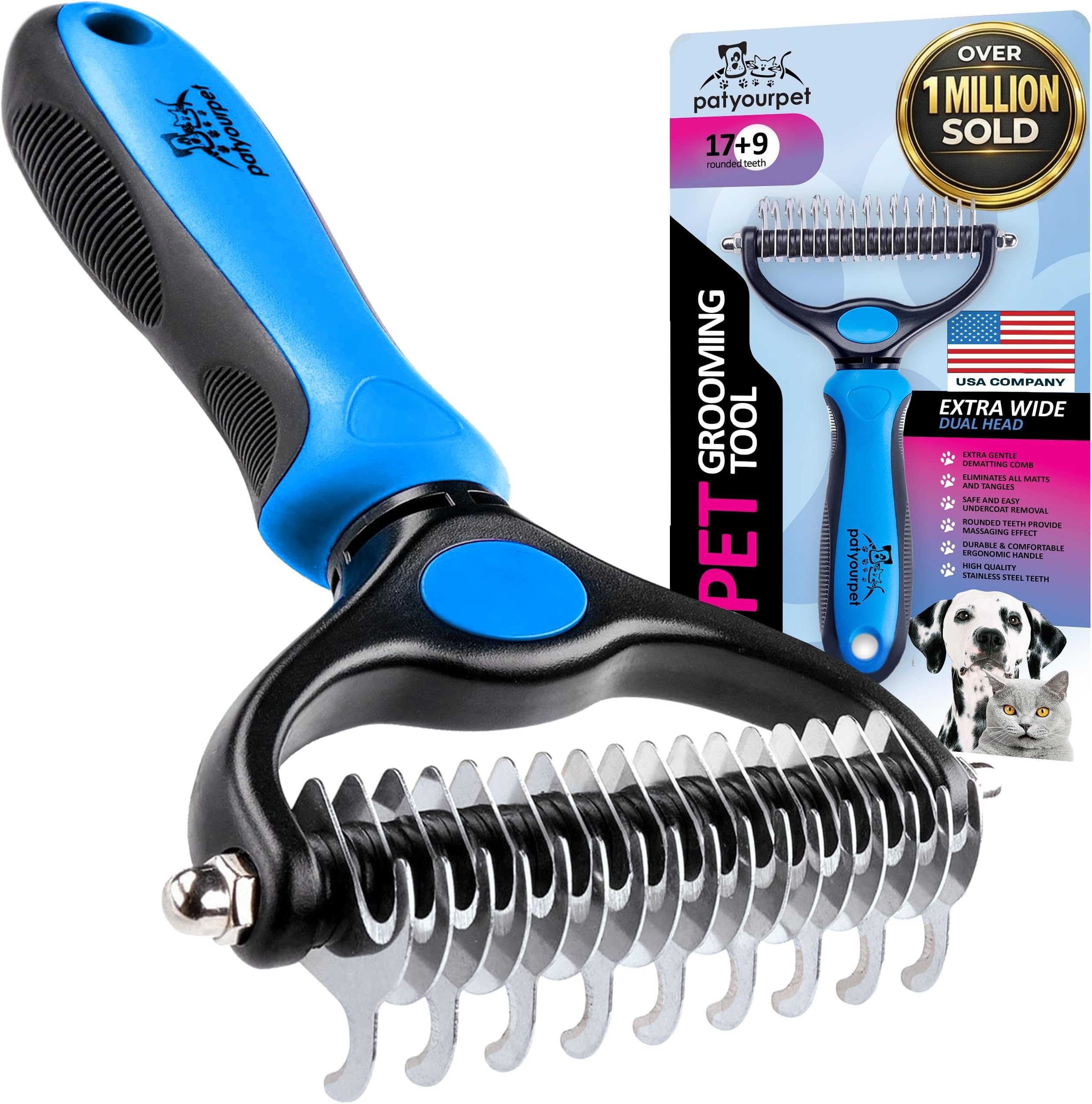
Pat Your Pet Deshedding Brush

Pat Your Pet Deshedding Brush

Budget dual-sided rake

Our Score 9.2/10
Check Price

Worth Noting

  • May cause discomfort for some dogs if used with too much pressure; technique matters
Handle
Non-slip ergonomic
Tool Type
Undercoat rake, dual-sided
Pin Safety
Rounded teeth
Tooth Design
Dual-sided, fixed teeth
Read the full review

The Pat Your Pet brush uses the same dual-head configuration as the top pick (9-tooth dematting, 17-tooth deshedding) but costs less. It effectively lifts loose undercoat from short-haired double coats like Labs, removing significant hair per session.

This brush suits Lab owners who want a budget-friendly deshedder and are comfortable with proper technique. Comfort depends on pressure: a light hand works well, but some dogs may dislike the rake pressure if applied too forcefully. It is best for owners who can adapt their grooming style rather than expecting a foolproof tool.

Brush gently with the grain to avoid pulling – a light touch works best for removing undercoat.

Bottom line: For Lab owners on a budget who are willing to use proper brushing technique, this brush delivers solid performance without the premium price tag.

6

SleekEZ Deshedding Brush 5in

SleekEZ Deshedding Brush 5in

Multi-purpose deshedder

Our Score 9.2/10
Check Price

Worth Noting

  • Sharp blade can nick skin if used with too much force or on a moving dog.
Handle
Wooden handle
Tool Type
Blade-style deshedder
Pin Safety
Grabs hair, not skin
Tooth Design
Patented blade edge
Read the full review

The SleekEZ's patented blade pulls loose undercoat from a Lab's coat and then removes the same shed hair from couch cushions, carpets, and clothing in one motion. Unlike deshedders that only work on the dog, this tool keeps working around the house.

This brush suits Lab owners who want a single tool for both grooming and cleanup, but the blade is sharp — a steady hand is required to avoid nicking skin. It's best for dogs that tolerate blade contact and for owners who prefer not to swap tools between dog and furniture.

Use a light, gliding motion and brush in the direction of hair growth to avoid skin contact with the blade.

Bottom line: Lab owners who also battle shed hair on furniture will find this tool pulls double duty, provided they handle it with care.

7

Docrok Grooming Combo

Docrok Grooming Combo

Multi-pet combo

Our Score 9.2/10
Check Price

Worth Noting

  • Brush head is narrow, requiring extra passes on large Lab bodies.
  • Included metal comb serves little purpose for short-haired breeds like Labs.
Handle
TPR handle
Tool Type
2-in-1 brush + comb
Pin Safety
Stainless steel, metal tips
Tooth Design
Wide + dense sides
Read the full review

This combo provides a deshedding brush and metal comb for a reasonable price, making it a practical kit for households with diverse coat types. The brush removes undercoat effectively, though its narrow head demands repeated passes on large Lab bodies. The metal comb targets mats on long-haired pets, which short-coated Labs rarely develop. For Lab-only owners, a wider rake like the MalsiPree offers more efficiency with fewer passes.

Bottom line: Best suited for multi-pet homes with a mix of coat types; Lab-only households will get faster results from a dedicated wide rake.

8

Swihauk Self-Cleaning Slicker

Swihauk Self-Cleaning Slicker

Gentle self-cleaning

Our Score 9.2/10
Check Price

Worth Noting

  • Firm bristle resistance can be felt by pets that are very sensitive to brushing pressure.
Handle
Lightweight TPR non-slip
Tool Type
Self-cleaning slicker
Pin Safety
Plastic round tips
Tooth Design
Retractable stainless pins
Read the full review

Retractable bristles with round plastic tips minimize skin irritation during daily brushing. The self-cleaning mechanism quickly ejects loose hair with a button push. This slicker works well for light surface hair removal on Labs and even cats. However, it is not designed for deep undercoat extraction; the bristles may feel firm for some sensitive pets. For a Lab owner, this serves as a convenient maintenance tool between heavier deshedding sessions with an undercoat rake.

Bottom line: Choose this brush for light daily touch-ups and surface loose hair removal on your Lab – but pair it with an undercoat rake for heavy shedding periods.

9

Dipoo Self-Cleaning Slicker

Dipoo Self-Cleaning Slicker

Light grooming

Our Score 9.2/10
Check Price

Worth Noting

  • Bristle firmness may be uncomfortable for some dogs
  • Plastic bristles may bend or break over time with regular use
Handle
Comfort non-slip grip
Tool Type
Self-cleaning slicker
Pin Safety
Plastic round beads on tips
Tooth Design
Bent stainless pins
Read the full review

This self-cleaning slicker brush offers a quick way to remove surface loose hair and keep your Lab's coat tidy between deeper deshedding sessions. The push-button release makes hair cleanup effortless, and the round-tip bristles are gentle on skin. However, it is not effective for dense undercoat removal required during peak shedding seasons, and the bristle firmness may feel off-putting to some dogs. Additionally, the plastic bristles can bend or break with repeated heavy use, making this a tool for maintenance rather than primary deshedding.

Bottom line: Best suited for Lab owners who already own an undercoat rake and need a convenient brush for quick daily touch-ups, not as a standalone shedding solution.

10

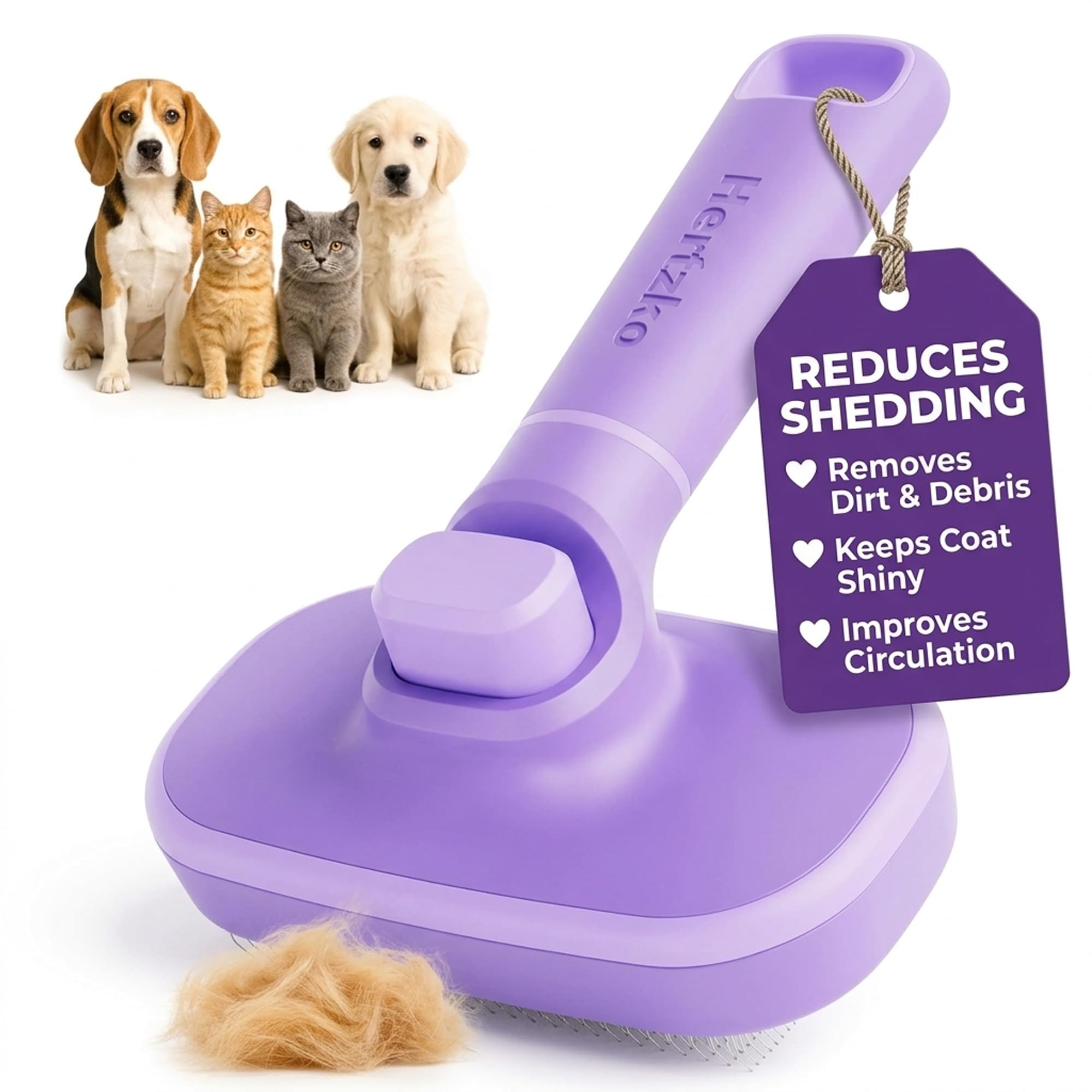
Hertzko Self-Cleaning Slicker

Hertzko Self-Cleaning Slicker

Daily maintenance brush

Our Score 9.0/10
Check Price

Worth Noting

  • Hair can fly into the air during brushing; best used in a contained area.
  • Does not remove deep undercoat
Handle
Comfort grip, reduces fatigue
Tool Type
Self-cleaning slicker
Pin Safety
Fine tips, non-scratching
Tooth Design
Fine, angled bristles
Read the full review

Pushing a button releases all trapped hair instantly, making this the quickest slicker brush to clean between strokes. No prying clumps off bristles, no hair stuck in the brush head. The fine, angled bristles lift loose surface hair without scratching the skin, and most dogs tolerate the sensation well.

Loose hair can drift into the air during brushing, so grooming in a contained area or outdoors helps manage the mess. This brush handles everyday shedding maintenance but cannot reach the dense undercoat of a Labrador — that requires an undercoat rake or deshedding tool for heavy seasonal blowouts.

Best for Lab owners who want a fast between-grooming brush that doesn't require tedious cleanup. Not a replacement for a rake; use it for daily touch-ups and finishing, not primary undercoat removal.

Brush over a newspaper or outdoors to catch flying hair.

Bottom line: A fast-cleaning slicker for daily maintenance on Labs that tolerate brushing, but you'll still need a rake for seasonal shedding.

11

MIU COLOR Deshedding Tool

MIU COLOR Deshedding Tool

Budget Furminator alternative

Our Score 9.0/10
Check Price

Worth Noting

  • May pull hair if used aggressively; requires a light, controlled brushing technique
Handle
Anti-slip plastic + silicone
Tool Type
Blade-style deshedder
Pin Safety
Detachable blade cover
Tooth Design
Steel blade, evenly spaced
Read the full review

The MIU COLOR blade deshedder matches the undercoat removal performance of a Furminator on short-haired Labs for a fraction of the cost. Its stainless steel teeth and non-slip handle work well when used with light pressure. The trade-off: aggressive strokes can pull hair, so it demands a careful technique. This tool is best for budget-conscious Lab owners who brush gently, not for those who prefer a rake handle or have pets with sensitive skin.

Bottom line: For Lab owners on a tight budget who can commit to a light brushing touch, this tool delivers Furminator-level shedding reduction at a fraction of the cost.

12

Depets Self-Cleaning Slicker

Depets Self-Cleaning Slicker

Ultra-budget slicker

Our Score 9.0/10
Check Price

Worth Noting

  • Bristle firmness may be uncomfortable for pets with sensitive skin.
Handle
Lightweight TPR non-slip
Tool Type
Self-cleaning slicker
Pin Safety
Round beads on tips
Tooth Design
Stainless pins, 60deg bend
Read the full review

At a budget-friendly price, the Depets Self-Cleaning Slicker offers one-push hair ejection for quick cleanup and gentle stainless steel bristles with rounded tips. While adequate for cats, rabbits, or light shedding on small dogs, it lacks the density to tackle a Labrador's dense undercoat — treat this as a maintenance brush for occasional use, not a primary deshedding tool.

Bottom line: Lab owners need a dedicated undercoat rake for shedding season, but this slicker works as a quick weekly touch-up tool for keeping the topcoat smooth.

13

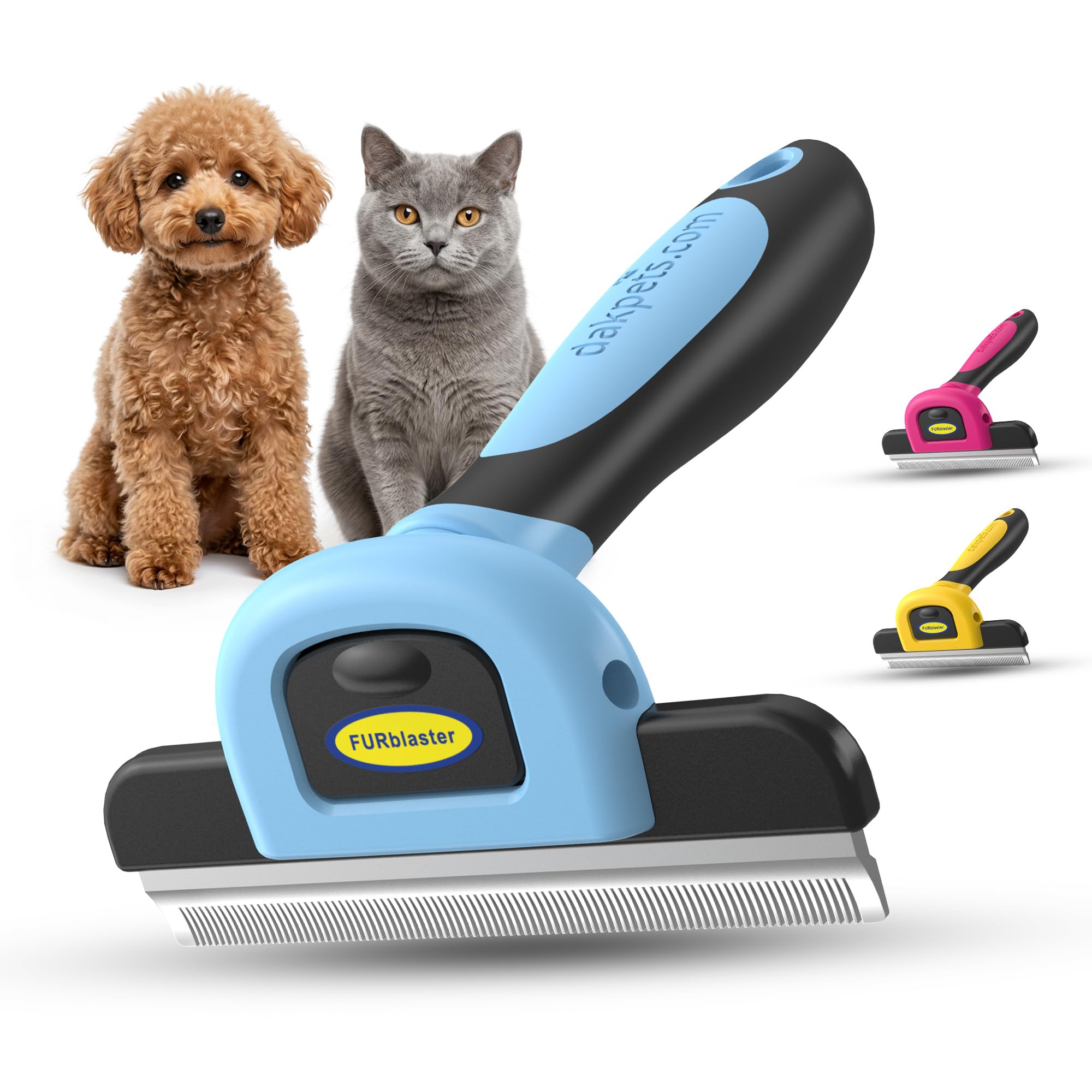
DakPets Deshedding Brush

DakPets Deshedding Brush

Mass-market deshedder

Our Score 9.0/10
Check Price

Worth Noting

  • Requires careful technique to avoid pulling hair
Handle
Anti-slip handle
Tool Type
Blade-style deshedder
Pin Safety
Shatterproof handle
Tooth Design
Stainless steel blade
Read the full review

The DakPets brush has earned a large following among dog owners, but its real-world performance specifically on Labrador undercoat remains unverified in detailed accounts. It is a straightforward stainless steel blade deshedder, not a rake, so it demands a light hand to avoid pulling hair. For buyers who prioritize a widely-purchased, low-cost tool over confirmed Lab-specific results, this is a reasonable starting point.

Bottom line: Best suited for Lab owners who want a low-cost blade deshedder and are comfortable relying on its broad reputation rather than targeted Lab-specific feedback.

How to Choose

Tool Type: Undercoat Rake vs. Slicker Brush

An undercoat rake uses metal teeth to reach the dense second layer of a double coat, pulling out loose hair that a slicker brush only skims. Slicker brushes are fine for daily touch-ups but cannot remove the bulk of shedding fur during peak seasons.

For a Labrador, the rake is the primary tool. Slickers work as a maintenance brush between deeper sessions to keep loose surface hair off furniture.

Tooth Design: Fixed vs. Rotating

Fixed-teeth rakes grab more undercoat per stroke, which means fewer passes but requires a steady, gentle hand. Press too hard and the tips can irritate the skin, especially on dogs that flinch.

Rotating-teeth rakes reduce tugging by moving with the hair direction, making them more comfortable for sensitive dogs. The trade-off is that each stroke removes less hair, so you may need to brush longer to achieve the same result.

Pin Safety: Rounded vs. Sharp Tips

Always look for teeth with rounded or blunted ends. Sharp edges can scratch the skin, leading to redness and a negative association with brushing. Many budget rakes claim rounded tips but still feel sharp; user feedback on comfort is a reliable guide.

If your Lab has sensitive skin, prioritize products where reviews consistently mention the dog tolerating the brush well. Some rakes with rotating teeth naturally avoid the scraping feel.

Self-Cleaning Mechanism

Self-cleaning slicker brushes use a push-button to retract bristles, making hair removal instant and mess-free. This is a major convenience if you brush daily, but the mechanism adds moving parts that can wear out over time.

Undercoat rakes lack self-cleaning features, so you must manually pull hair from the teeth. The trade-off is simplicity and durability – no plastic buttons to break. Choose based on how much you value cleanup speed versus long-term reliability.

Handle Ergonomics and Grip

A comfortable handle matters when you are brushing a large breed like a Lab for ten minutes or more. Look for rubberized, non-slip grips that reduce hand fatigue. Cushioned handles can further absorb pressure from firm strokes.

Wooden handles (common on blade-style tools) may become slippery if wet. Foam or TPR handles offer better control for extended grooming sessions.

Frequently Asked Questions